Pain Management
Can Sciatica Cause Knee, Calf, or Foot Pain?
October 9, 2026 · 12 min read

Medical note: This article provides general education and cannot diagnose the cause of knee, calf, or foot pain. Sciatica is one possible explanation for radiating leg symptoms, but pain in these areas can also come from joint problems, muscle or tendon injuries, circulation problems, peripheral nerve conditions, infection, or other medical causes. Seek urgent care for new bowel or bladder problems, numbness around the groin or inner thighs, rapidly worsening weakness, severe trauma, chest pain, trouble breathing, or a swollen painful calf.
Can Sciatica Cause Pain in the Knee, Calf, or Foot?
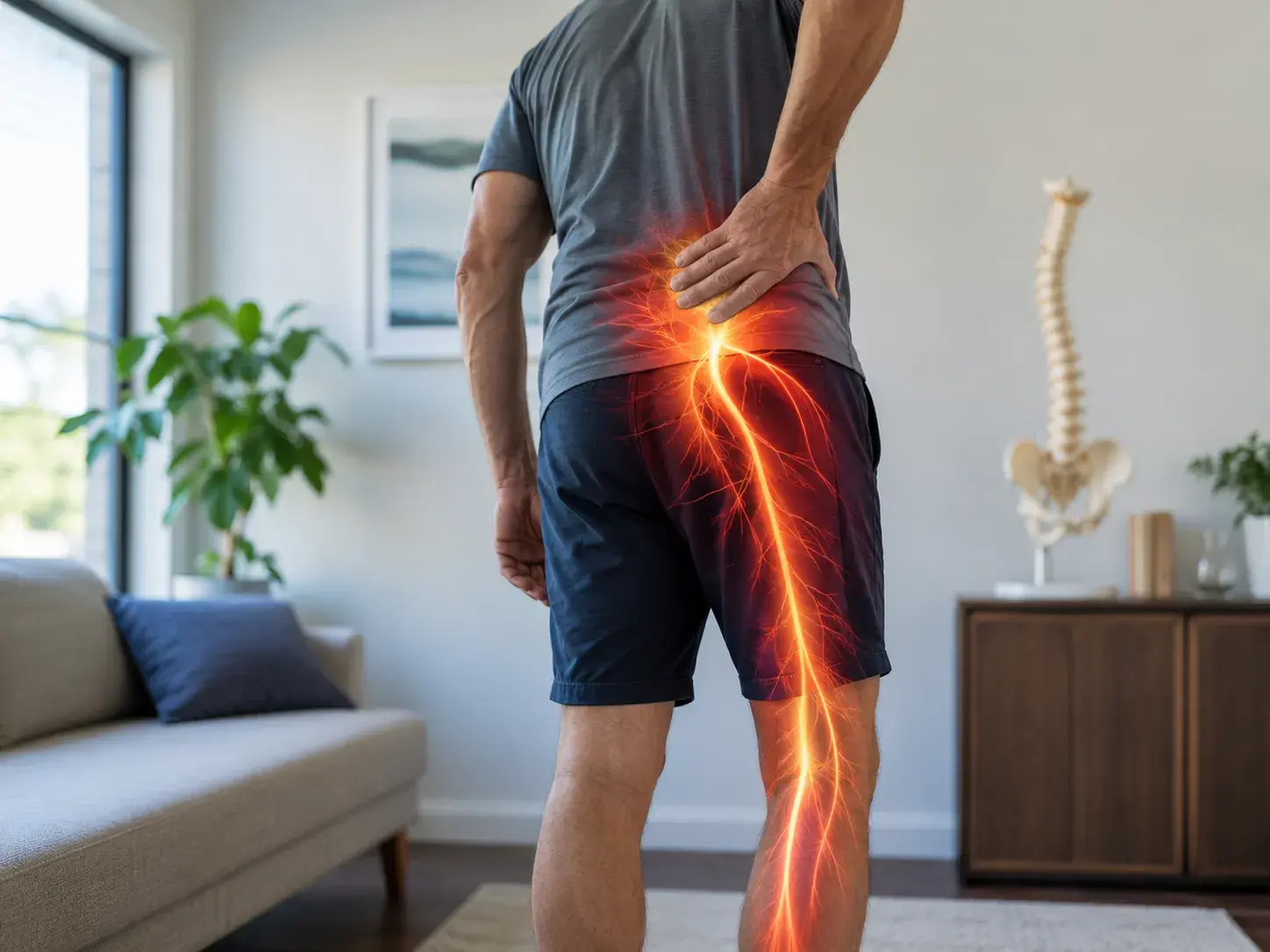
Yes. Sciatica can cause pain that travels from the lower back or buttock down one leg and may reach the knee, calf, ankle, foot, or toes.
For some people, the pain is sharp or shooting. Others describe burning, electric-like pain, tingling, numbness, or weakness.
But not every pain in the knee, calf, or foot is sciatica.
The location of pain is only one clue. A clinician also considers how the symptoms started, whether they travel, whether numbness or weakness is present, what movements make the symptoms worse, whether there was an injury, and whether any warning signs are present.
If you are unsure whether your symptoms are coming from the back, knee, calf, or foot, Valley Dolor’s guide to when leg pain may actually be sciatica is another helpful starting point.
Quick Answer
Yes, sciatica may cause knee, calf, foot, or toe pain.
This happens because nerve roots in the lower back contribute to nerve pathways that continue through the buttock and down the leg.
Sciatica may cause:
- Radiating pain
- Burning
- Electric or shooting pain
- Tingling
- Numbness
- Leg weakness
- Foot weakness
- Pain that extends below the knee
However, knee, calf, and foot pain can also come from problems in those areas themselves.
Persistent, severe, new, or worsening symptoms should be assessed rather than assumed to be sciatica.
What Is Sciatica?
Sciatica is a term used to describe a pattern of nerve-related symptoms that often begins in the lower back or buttock and travels down one leg.
It is commonly associated with irritation or compression of nerve roots in the lower spine.
Those nerve roots contribute to the sciatic nerve and related nerve pathways that extend into the thigh, calf, foot, and toes.
Simple Definitions
| Term | What It Means |
| Sciatica | A pattern of radiating leg pain often associated with nerve irritation in the lower back |
| Sciatic nerve | A large nerve pathway that travels from the lower back through the buttock and down the leg |
| Nerve root | The beginning portion of a nerve as it exits the spine |
| Lumbar radiculopathy | Symptoms caused by irritation or compression of a nerve root in the lower back |
| Radiating pain | Pain that travels from one part of the body into another |
| Numbness | Reduced or altered sensation |
| Tingling | Pins-and-needles sensation |
| Weakness | Difficulty using or controlling part of the leg or foot normally |
Sciatica is a symptom pattern, not one single diagnosis.
Possible causes may include disc problems, spinal narrowing, degenerative changes, or other conditions affecting nerves in the lower back.
If you want a broader comparison, read Sciatica vs. Back Pain.
Can Sciatica Cause Knee Pain?
Yes. Sciatica can sometimes cause pain that is felt around the knee, particularly when nerve-related pain travels from the lower back or buttock through the thigh.
However, knee pain is extremely common and may also come from:
- Osteoarthritis
- Knee injury
- Tendon irritation
- Meniscus problems
- Patellofemoral pain
- Hip problems
- Muscle strain
- Local nerve irritation
- Other joint conditions
A clinician may think more strongly about nerve-related pain when knee pain occurs together with:
- Lower-back pain
- Buttock pain
- Pain traveling down the thigh
- Burning or electric pain
- Tingling
- Numbness
- Pain below the knee
- Leg or foot weakness
- Symptoms affected by sitting, bending, coughing, or sneezing
Knee Pain: Sciatica Pattern vs. Local Knee Pattern
| Pattern | May Fit Sciatica / Nerve Pain | May Suggest Another Cause |
| Pain starts in back or buttock and travels downward | Yes | Less typical of isolated knee pain |
| Burning or electric pain | Yes | Less typical of simple joint pain |
| Tingling or numbness | Yes | Less typical of isolated knee arthritis |
| Pain extends below knee | Can occur | Can still have other causes |
| Knee swelling or redness | Not typical of uncomplicated sciatica | May indicate joint, inflammatory, or other condition |
| Pain after twisting knee | Not enough to diagnose sciatica | May suggest local knee injury |
| Locking or instability | Not typical of sciatica alone | May suggest joint or soft-tissue problem |
If your pain seems centered in the knee, you may also want to read Knee Pain When Walking or Climbing Stairs and Knee Pain Treatment Without Surgery.
Can Sciatica Cause Calf Pain?
Yes. Sciatica can cause pain in the calf, especially when pain travels from the buttock or lower back down the back or side of the leg.
Sciatica-related calf pain may feel:
- Burning
- Sharp
- Electric
- Deep
- Cramping
- Pulling
- Tingling
- Numb
However, calf pain deserves extra attention because it can also come from causes that are very different from sciatica.
These may include:
- Muscle strain
- Tendon problems
- Overuse
- Circulation problems
- Blood clots
- Infection
- Injury
Do Not Assume New Calf Pain Is Sciatica
Seek urgent medical care if calf pain occurs with:
- New swelling in one leg
- Warmth or redness
- Significant tenderness
- Chest pain
- Shortness of breath
- Coughing blood
- Fainting
- Rapid heartbeat
- Severe pain after injury
- Fever with a hot or swollen leg
These symptoms may indicate something that needs urgent evaluation.
For a broader comparison of muscular, joint, nerve, and circulation-related pain, read Leg Pain Causes: Muscle, Joint, Nerve, and Circulation Differences.
Can Sciatica Cause Foot or Toe Pain?
Yes. Sciatica can cause symptoms in the foot or toes when irritation affects nerve pathways that continue into the lower leg and foot.
People may experience:
- Burning in the foot
- Electric sensations
- Tingling in the toes
- Numbness
- Pain on the outside of the foot
- Pain in the sole
- Weakness
- Difficulty lifting the front of the foot
- Tripping because the foot does not lift normally
However, foot pain has many other possible causes.
These include:
- Plantar fasciitis
- Arthritis
- Tendon injuries
- Peripheral neuropathy
- Diabetes-related nerve problems
- Local nerve compression
- Footwear-related irritation
- Injury
- Circulation problems
Foot Symptoms: Possible Sciatica vs. Other Causes
| Symptom | Could Occur With Sciatica? | Other Possible Causes |
| Burning or electric foot pain | Yes | Neuropathy, local nerve irritation |
| Tingling in toes | Yes | Peripheral neuropathy, circulation problems |
| Pain traveling from buttock to foot | Yes | Requires clinical assessment |
| Heel pain mainly on first steps | Less typical | Local foot conditions |
| Foot pain after injury | Possible | Sprain, fracture, tendon injury |
| Foot swelling, redness, warmth | Not typical of uncomplicated sciatica | Injury, infection, inflammation, vascular problems |
| Difficulty lifting foot | Possible nerve weakness | Needs prompt assessment |
How Sciatica Pain Can Travel Through the Leg
Sciatica does not always follow one exact path.
Some people feel symptoms mostly in the buttock and thigh.
Others have pain mainly below the knee.
Some experience more tingling or numbness than pain.
A simplified symptom pathway may look like:
Lower back or buttock → thigh → knee area → calf → foot → toes
The exact pattern varies because nerve pathways overlap.
That is why symptom location alone should not be used to self-diagnose sciatica.
If your symptoms began with lower-back pain, Valley Dolor’s guide to lower back pain causes and warning signs may help you understand the bigger picture.
Signs That May Suggest Sciatica Rather Than Local Knee or Foot Pain
A clinician may consider sciatica or lumbar nerve irritation when symptoms include several of the following:
- Pain starts in the lower back or buttock
- Pain travels down one leg
- Pain extends below the knee
- Burning, electric, sharp, or shooting pain
- Tingling
- Numbness
- Altered sensation
- Symptoms worsened by coughing or sneezing
- Pain worsened by prolonged sitting
- Symptoms affected by bending or back movement
- Leg pain stronger than back pain
- Weakness in the leg, ankle, or foot
These are clues—not a diagnosis.
If your symptoms are mainly leg symptoms and you are unsure whether they fit a nerve-related pattern, see When Is Leg Pain Actually Sciatica?.
Can Sciatica Cause Pain Without Much Back Pain?
Yes.
Some people with sciatica have very little lower-back pain.
Their main symptoms may be:
- Buttock pain
- Thigh pain
- Knee-area pain
- Calf pain
- Foot pain
- Tingling
- Numbness
- Weakness
This is one reason sciatica can sometimes be mistaken for a knee or leg problem.
But the reverse is also true: not every leg symptom comes from the back.
A clinical evaluation helps distinguish these patterns.
What Can You Do While Waiting for an Evaluation?
If symptoms are mild and you do not have warning signs, some general measures may be reasonable.
The aim is to avoid aggravating symptoms—not to self-treat a specific diagnosis.
You may consider:
- Changing positions regularly
- Avoiding prolonged bed rest
- Breaking activities into shorter periods
- Avoiding heavy lifting if it clearly worsens symptoms
- Avoiding twisting movements that aggravate pain
- Tracking when symptoms occur
- Noting whether numbness or weakness develops
- Noting whether pain reaches the foot or toes
- Using medications only as directed
- Asking a clinician before beginning a new exercise or stretching program
Do not force movements that cause:
- Severe pain
- Increasing radiating pain
- New weakness
- New numbness
- Loss of balance
- Difficulty walking
For broader conservative back-pain options, read Non-Invasive Back Treatments: What Works Before You Consider Surgery.
When Sciatica-Like Symptoms Need Emergency Care
Seek emergency medical attention if you experience:
- New trouble controlling your bladder or bowel
- Difficulty urinating
- Numbness around the groin, genitals, buttocks, or inner thighs
- Rapidly worsening leg weakness
- Weakness affecting both legs
- New foot drop
- Inability to walk safely
- Severe back pain after a major fall or accident
- Severe pain with fever or chills
- Severe pain with unexplained weight loss
- New symptoms with a history of cancer
- Severe calf swelling with redness or warmth
- Calf pain with chest pain or shortness of breath
Some of these symptoms may indicate serious conditions such as severe nerve compression, cauda equina syndrome, fracture, infection, vascular problems, or another medical emergency.
If you believe you are experiencing a medical emergency, call 911.
What Is Foot Drop, and Why Does It Matter?
Foot drop means difficulty lifting the front of the foot normally.
A person may:
- Drag the toes
- Trip more often
- Feel that the foot catches while walking
- Need to lift the knee higher to avoid dragging the foot
- Notice new ankle or foot weakness
Nerve-related conditions, including significant nerve-root compression, can sometimes contribute to foot drop.
New foot drop should be assessed promptly.
Do not wait for severe weakness to improve on its own without evaluation.
When Should You Schedule a Pain Management Evaluation?
Arrange an evaluation if:
- Leg pain persists or worsens
- Pain affects walking
- Symptoms interfere with sleep
- Pain limits work or driving
- Pain reaches the knee, calf, foot, or toes
- You have persistent tingling or numbness
- Mild weakness does not improve
- Symptoms have lasted several weeks
- You have recurring flare-ups
- You are unsure whether pain is coming from the back, knee, hip, calf, or foot
- Self-care has not helped
- Pain is affecting your quality of life
Valley Dolor provides pain-management care for patients with back pain, sciatica, knee pain, leg pain, nerve-related symptoms, and chronic pain concerns in Newburgh and the Hudson Valley.
You can learn more about Valley Dolor’s chronic pain approach.
What May Happen During a Sciatica Evaluation?
A clinician may ask:
- Where did the pain start?
- Does it travel?
- Does it reach the knee?
- Does it reach the calf?
- Does it reach the foot or toes?
- Do you have tingling?
- Do you have numbness?
- Do you have weakness?
- What makes symptoms worse?
- Does sitting affect the pain?
- Does coughing or sneezing make it worse?
- Was there an injury or heavy lift?
- Have you fallen recently?
- Have you had changes in bladder or bowel function?
- What treatments have you already tried?
A physical assessment may include:
- Movement
- Walking
- Strength
- Reflexes
- Sensation
- Back movement
- Leg movement
- Functional ability
Imaging is not always required immediately.
The purpose of evaluation is to understand whether symptoms appear nerve-related, identify warning signs, and determine appropriate next steps.
If your pain is persistent or complex, start with Valley Dolor’s patient care and appointment information.
How Sciatica Relates to Other Pain Conditions
Sciatica symptoms can overlap with several other common pain conditions.
For example:
- Knee pain may be local or nerve-related
- Calf pain may be muscular, vascular, or nerve-related
- Foot pain may involve nerves, joints, tendons, or circulation
- Lower-back pain may occur with or without sciatica
- Chronic pain may involve more than one source
Related Valley Dolor resources include:
- When Is Leg Pain Actually Sciatica?
- Leg Pain Causes: Muscle, Joint, Nerve, and Circulation Differences
- Lower Back Pain: Common Causes, Warning Signs and When to Seek Care
- Knee Pain When Walking or Climbing Stairs
- Knee Pain Treatment Without Surgery
- Why Does My Back Hurt When I Wake Up?
- Non-Invasive Back Treatments
- 7 Signs Your Back Pain Needs More Than Rest and Ice
Frequently Asked Questions
Can sciatica cause knee pain without back pain?
Yes. Some people with sciatica have more leg pain than back pain, and symptoms may sometimes be felt near the knee. However, knee pain has many possible causes, so persistent or concerning symptoms should be assessed.
Can sciatica cause calf pain?
Yes. Sciatica can cause radiating pain, tingling, numbness, burning, or weakness in the calf.
However, calf pain can also be caused by circulation problems or blood clots. New swelling, warmth, redness, chest pain, or shortness of breath requires urgent medical attention.
Can sciatica cause foot pain?
Yes. Sciatica may cause pain, burning, tingling, numbness, or weakness in the foot or toes.
New or progressive weakness should be assessed promptly.
Can sciatica cause pain below the knee?
Yes. Sciatica often travels below the knee into the calf, ankle, foot, or toes.
Pain below the knee alone does not prove sciatica, but it may be one important clue.
Is knee pain always sciatica?
No.
Knee pain may come from:
- Arthritis
- Injury
- Tendons
- Ligaments
- Meniscus
- Hip problems
- Back problems
- Nerves
- Other medical conditions
How do I know whether calf pain is sciatica or a blood clot?
You cannot reliably determine this from an article.
Sciatica may cause radiating pain, tingling, numbness, or weakness.
A blood clot may cause one-sided swelling, warmth, redness, or tenderness and may be associated with chest pain or shortness of breath.
Seek urgent medical attention if those symptoms occur.
Can sciatica cause numbness in the toes?
Yes. Nerve irritation may cause numbness or tingling in parts of the foot or toes.
Persistent, worsening, or severe numbness should be evaluated.
Can sciatica cause foot drop?
Severe nerve irritation or compression can sometimes contribute to weakness affecting the ability to lift the front of the foot.
New foot drop requires prompt medical assessment.
Do I always need an MRI for sciatica?
No.
Imaging is not needed for every person with sciatica.
A clinician may consider imaging when there are red flags, significant weakness, progressive neurological symptoms, trauma, persistent symptoms, or another reason that imaging would change treatment planning.
Can pain management help with sciatica?
Pain-management clinicians can evaluate persistent or chronic pain, assess whether symptoms may be nerve-related, review previous treatment and imaging, coordinate referrals when needed, and develop an individualized care plan.
The right approach depends on the cause, severity, function, medical history, and clinical findings.
Radiating Leg Pain Deserves a Careful Evaluation
Pain traveling from the lower back or buttock into the knee, calf, foot, or toes may be related to sciatica or another nerve-related problem.
But symptoms in these areas can also come from joints, muscles, tendons, circulation, or other medical conditions.
If your symptoms are persistent, worsening, affecting walking or sleep, or associated with numbness or weakness, a clinical evaluation can help clarify the pattern and determine appropriate next steps.
Valley Dolor provides individualized pain-management care in Newburgh, New York, serving patients throughout the Hudson Valley.
Read: When Is Leg Pain Actually Sciatica?