Pain Management
Lower Back Pain: Common Causes, Warning Signs and When to Seek Care
August 21, 2026 · 14 min read · By elham

Lower Back Pain: The Direct Answer
Lower back pain can come from muscles, joints, discs, nerves, arthritis, injury, posture, movement habits, or other medical conditions. Many episodes improve with appropriate conservative care, but some symptoms need prompt medical attention.
Seek urgent care for lower back pain after major trauma, new weakness, numbness around the groin or saddle area, new bowel or bladder problems, fever, severe abdominal pain, unexplained weight loss, or pain that is rapidly worsening. Mayo Clinic advises immediate medical attention for back pain that occurs after trauma, causes new bowel or bladder problems, occurs with fever, or causes weakness, numbness, or tingling in one or both legs.
At Valley Dolor Pain Management, we help patients in Newburgh, NY, the Hudson Valley, and eligible mobile-service areas across New York understand what may be contributing to their back pain and what next steps may be appropriate.
Request a Back Pain Evaluation
Lower Back Pain Is Common, But the Pattern Matters
Lower back pain is one of the most common reasons people limit activity, miss work, avoid exercise, struggle with sleep, or feel less confident moving through daily life. It can start suddenly after lifting something, develop gradually over time, or appear without one obvious cause.
The most important question is not only “Where does it hurt?” It is also:
- How did the pain start?
- Does it stay in the lower back or travel into the buttock, hip, or leg?
- Does it feel aching, sharp, burning, electric, tight, or stiff?
- Does sitting, standing, bending, lifting, coughing, or walking make it worse?
- Is there numbness, tingling, weakness, or leg pain?
- Are any warning signs present?
This article explains common lower back pain causes, warning signs, when pain may involve sciatica or nerve irritation, when to seek urgent care, and what a back pain evaluation may involve.
What Is Lower Back Pain?
Lower back pain usually refers to discomfort in the lumbar region, below the ribs and above the buttocks. It may stay local, or it may spread into the buttocks, hips, groin, thighs, calves, feet, or legs.
Lower back pain can feel like:
- Aching
- Stiffness
- Tightness
- Sharp pain
- Pressure
- Muscle spasm
- Burning
- Electric pain
- Cramping
- Pain that travels down the leg
Cleveland Clinic explains that lower back pain can come from many structures, including muscles, discs, joints, nerves, and other conditions, and that it may sometimes be connected to issues such as arthritis, disc injury, structural problems, infection, tumors, or kidney stones.
Acute, Subacute, and Chronic Lower Back Pain
| Type | General Time Pattern | What It Means |
| Acute lower back pain | Often begins suddenly and lasts days to weeks | May follow strain, injury, lifting, twisting, or routine activity |
| Subacute lower back pain | Persists beyond the earliest stage | May need reassessment if not improving |
| Chronic lower back pain | Lasts 12 weeks or longer | Often requires a broader evaluation and management plan |
Chronic back pain is commonly described as pain that persists for three months or longer.
Why Pain Location Alone Does Not Identify the Cause
Two people can have pain in the same lower back area but have very different causes. One person may have muscle strain. Another may have nerve irritation. Another may have referred pain from the hip or another medical issue.
A clinician may consider:
- Medical history
- Injury history
- Physical exam findings
- Pain pattern
- Nerve symptoms
- Functional limits
- Prior imaging
- Medication history
- Red flags
- Response to previous care
Imaging is not always needed immediately. Mayo Clinic recently noted that MRI is usually not needed in the first six weeks for low back pain or sciatica unless concerning symptoms are present.
Common Causes of Lower Back Pain
1. Muscle Strain, Ligament Strain, and Mechanical Back Pain
Muscle and ligament strain are among the most common causes of lower back pain. This can happen after lifting, twisting, bending, sudden movement, poor lifting mechanics, unusual activity, or prolonged sitting.
Symptoms may include:
- Local lower back aching
- Tightness
- Soreness
- Muscle spasms
- Pain with bending or twisting
- Pain that improves with rest or position changes
- Pain without numbness, tingling, or weakness
Some people can identify the exact moment pain started. Others simply wake up with pain or notice symptoms after a long day of sitting, driving, or physical work.
2. Disc-Related Pain and Herniated Disc
Spinal discs sit between the bones of the spine and help cushion movement. A disc may bulge, herniate, or degenerate over time. Sometimes this irritates nearby nerve roots.
Disc-related symptoms may include:
- Lower back pain
- Buttock pain
- Pain traveling into the leg
- Tingling
- Numbness
- Weakness
- Pain worse with sitting, bending, coughing, or sneezing
Not every disc finding on imaging causes pain. Many people have disc changes without symptoms. This is why symptoms, exam findings, and imaging must be interpreted together.
3. Sciatica and Lumbar Radiculopathy
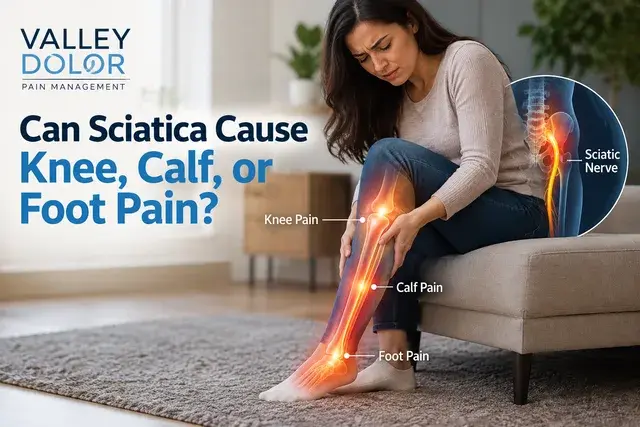
Sciatica refers to a symptom pattern where pain may travel from the lower back or buttock into the leg. It may feel burning, electric, shooting, tingling, numb, or weak.
Sciatica may happen when a nerve root in the lower spine becomes irritated or compressed. Cleveland Clinic describes sciatica as pain that can feel burning or electric and may travel down one leg, sometimes with numbness, tingling, or weakness.
For a deeper comparison, read: Sciatica vs. Back Pain.
4. Spinal Stenosis
Spinal stenosis refers to narrowing around the spinal nerves. In the lower back, it may contribute to back pain, leg pain, heaviness, numbness, tingling, or difficulty walking.
Symptoms may be worse with standing or walking and may improve with sitting or leaning forward, although every patient is different.
A clinician may assess walking tolerance, nerve signs, strength, sensation, reflexes, and imaging when appropriate.
5. Arthritis and Degenerative Spine Changes
Arthritis can affect the joints in the spine. Degenerative changes become more common with age, but they do not always cause pain.
Spine arthritis or degenerative changes may contribute to:
- Stiffness
- Aching
- Pain with movement
- Reduced flexibility
- Pain that worsens after inactivity
- Pain that overlaps with hip or leg symptoms
If you also have joint pain or arthritis flare-ups, read: Arthritis and Joint Pain: Non-Surgical Ways to Manage Flare-Ups.
6. Spondylolisthesis and Structural Conditions
Spondylolisthesis happens when one vertebra shifts relative to another. This can contribute to back pain, instability, nerve irritation, or activity-related discomfort.
Some structural conditions are mild and monitored conservatively. Others may need imaging, specialist review, or surgical consultation depending on severity and symptoms.
7. Referred Pain From the Hip, Abdomen, Pelvis, or Other Areas
Not all pain felt in the lower back starts in the spine.
Possible referred sources may include:
- Hip problems
- Pelvic conditions
- Kidney stones
- Abdominal conditions
- Vascular conditions
- Sacroiliac joint irritation
- Nerve conditions
- Other medical issues
This is especially important when symptoms do not follow a typical mechanical pattern, are severe, come with abdominal symptoms, fever, urinary symptoms, circulation changes, or feel unusual.
Lower Back Pain Symptoms: What Can the Pattern Tell You?
Pain patterns do not diagnose the condition by themselves, but they can guide evaluation.
Mechanical or Muscle-Related Pattern
This pattern may include:
- Local aching or tightness
- Pain after lifting, bending, twisting, prolonged sitting, or standing
- Muscle spasm
- Pain improved by changing position
- No numbness, tingling, or weakness
Mechanical lower back pain may improve with conservative care, but recurring or worsening pain should still be evaluated.
Nerve-Related or Sciatica-Like Pattern
This pattern may include:
- Pain into the buttock, thigh, calf, foot, or toes
- Burning, shooting, or electric pain
- Tingling or numbness
- Weakness
- Symptoms worsened by coughing, sneezing, bending, or prolonged sitting
- Pain extending below the knee
If your back pain travels into the leg, read: 7 Signs Your Back Pain Needs More Than Rest and Ice.
Inflammatory or Systemic Pattern
This pattern may include:
- Fever
- Chills
- Unexplained weight loss
- Pain that is persistent or severe at rest
- Pain at night
- New symptoms in someone with a cancer history
- Pain after infection
- Pain in someone with immune suppression
These symptoms need medical attention because they may indicate something more serious than routine mechanical back pain.
Referred or Non-Spine Pattern
This pattern may include:
- Severe abdominal pain
- Throbbing abdominal sensation
- Urinary symptoms
- Groin pain
- Hip pain
- Circulation changes
- Severe pain unrelated to movement
If pain does not seem connected to movement, posture, or the back itself, a broader medical assessment may be needed.
Lower Back Pain vs. Sciatica
Lower back pain and sciatica can overlap, but they are not the same thing.
| Feature | Lower Back Pain | Sciatica-Like Pain |
| Main location | Lower lumbar area | Back or buttock with pain traveling down the leg |
| Pain quality | Ache, stiffness, tightness, sharp pain | Burning, electric, shooting, tingling, numbness |
| Nerve symptoms | Often absent | May include numbness, weakness, or altered sensation |
| Typical pattern | Local or movement-related | Often follows a leg pathway |
| Best next read | Non-Invasive Back Treatments | Sciatica vs. Back Pain |
When Back Pain and Leg Pain Need Evaluation
Consider evaluation if you have:
- Pain extending below the knee
- New numbness or tingling
- Weakness
- Changes in walking
- Pain that worsens rapidly
- Pain affecting sleep, work, balance, or daily function
Mayo Clinic advises making an appointment when back pain spreads down one or both legs, especially below the knee, or causes weakness, numbness, or tingling.
When Is Lower Back Pain an Emergency?
Most lower back pain is not an emergency, but certain symptoms should never be ignored.
Seek Emergency Medical Care Now If Back Pain Occurs With:
- New loss of bowel or bladder control
- Difficulty urinating or new urinary retention
- Numbness in the groin, inner thighs, buttocks, or saddle area
- Sudden or progressive weakness in one or both legs
- Severe numbness, tingling, or loss of sensation
- Severe symptoms in both legs
- Major trauma, such as a car accident, fall, or sports injury
- Fever with severe back pain
- Severe abdominal pain or abdominal throbbing
- Severe pain with fainting, dizziness, chest symptoms, or circulation changes
- Known cancer history with new severe or unexplained back pain
- Severe pain that is constant, rapidly worsening, or associated with unexplained weight loss
Mayo Clinic lists trauma, fever, bowel or bladder control problems, weakness, numbness or tingling, unexplained weight loss, pain at rest or at night, and abdominal symptoms among reasons to seek medical care for back pain.
Emergency Reminder: Valley Dolor is not an emergency department. If you have a medical emergency, call 911 or go to the nearest emergency department.
When Should You Schedule a Back Pain Evaluation?
You should consider a non-emergency back pain evaluation if:
- Pain lasts longer than a few days or keeps recurring
- Pain is getting worse rather than improving
- Pain interferes with work, walking, sleep, exercise, driving, or daily tasks
- You have leg pain, numbness, tingling, or weakness
- You have already tried conservative measures without improvement
- You have a history of back injury, surgery, arthritis, osteoporosis, or chronic pain
- You are unsure whether symptoms involve the back, hip, leg, or nerves
- You want to understand non-surgical treatment options
Persistent pain can affect sleep, mood, mobility, work, relationships, and quality of life. Reassessment may help identify overlooked contributors and guide a more structured treatment plan.
For patients who want to understand conservative options first, read: Non-Invasive Back Treatments: What Works Before You Consider Surgery.
What Happens During a Lower Back Pain Evaluation?
At Valley Dolor, a lower back pain evaluation is designed to understand the full picture, not just the pain location.
Step 1: Discuss Symptoms and Health History
A clinician may ask:
- When did the pain start?
- Was there an injury?
- What movements make it worse or better?
- Does pain travel into the buttock, hip, or leg?
- Is there numbness, weakness, tingling, or burning?
- Are there bowel or bladder symptoms?
- How does pain affect sleep, work, walking, and daily activity?
- What treatments have you already tried?
- What medications and medical conditions are relevant?
- Have you had prior imaging or surgery?
Step 2: Physical Assessment
Assessment may include:
- Movement and range of motion
- Posture
- Walking pattern
- Strength
- Reflexes
- Sensation
- Leg-raise or nerve-tension testing
- Hip and knee assessment
- Local tenderness
- Functional abilities
The goal is to understand whether symptoms appear more mechanical, nerve-related, referred, systemic, or connected to another issue.
Step 3: Review Whether Imaging or Referral Is Appropriate
Imaging is not always necessary at the first visit. A clinician may recommend imaging, physical therapy, medication review, interventional pain options, orthopedic review, neurology, rheumatology, or other referrals based on findings.
NICE guidance for low back pain and sciatica emphasizes assessment and management from first presentation onward in people aged 16 and older, including identifying specific causes and considering appropriate treatments based on assessment.
Step 4: Build an Individualized Care Plan
Your care plan may include:
- Education and activity modification
- Physical therapy or rehabilitation referral
- Medication review
- Interventional pain-management discussion when appropriate
- Imaging or specialist referral if needed
- Follow-up monitoring
- Safety guidance for worsening symptoms
At Valley Dolor, treatment planning is based on symptoms, diagnosis, medical history, prior care, and patient goals.
Non-Surgical Treatment Options for Lower Back Pain
Many patients want to know what can be done before considering surgery. Non-surgical care may help many people, but the right plan depends on the cause and severity of pain.
Education and Activity Modification
Understanding triggers can help people modify activities temporarily. This may include adjusting lifting, bending, sitting, work setup, exercise intensity, or sleep position.
The goal is usually gradual movement and return to function, not prolonged bed rest.
Physical Therapy and Rehabilitation
Physical therapy may focus on:
- Mobility
- Strength
- Posture
- Movement confidence
- Core and hip strength
- Walking tolerance
- Safe return to activities
- Work-related movement habits
NICE recommends considering manual therapy only as part of a treatment package that includes exercise, with or without psychological therapy.
Medication Review
A clinician may discuss medication options based on diagnosis, health history, other medications, and safety factors.
Medication decisions should consider:
- Kidney health
- Stomach ulcer risk
- Heart and blood pressure history
- Bleeding risk
- Allergies
- Current medications
- Drug interactions
NICE advises clinical assessment and monitoring of risk factors when prescribing oral NSAIDs for low back pain.
Interventional Pain-Management Options
Depending on the diagnosis, symptoms, imaging, prior treatment, and clinical assessment, a pain-management specialist may discuss procedures intended to reduce pain or support function.
Whether a procedure is appropriate varies by patient. No procedure should be presented as a guaranteed cure or a guaranteed way to avoid surgery.
Referral When Needed
Some patients may need referral or coordination with:
- Physical therapy
- Orthopedics
- Spine surgery
- Neurosurgery
- Neurology
- Rheumatology
- Primary care
- Emergency care
- Other specialty evaluation
Surgery may be considered when nonoperative treatments have not provided sufficient relief and imaging findings match the patient’s symptoms, especially when concerning symptoms are present.
What Non-Surgical Care Cannot Promise
Non-surgical back pain care should be realistic and medically responsible.
It cannot promise:
- A cure for every cause
- Immediate relief
- Guaranteed avoidance of surgery
- The same outcome for all patients
- Elimination of all pain
- Treatment without follow-up or reassessment
The goal is to help manage pain, improve function, support mobility, and guide appropriate next steps based on clinical findings.
Questions to Ask About Lower Back Pain
Bring these questions to your appointment:
- What may be causing my lower back pain?
- Are there signs of nerve irritation or sciatica?
- Do my symptoms need imaging or urgent testing?
- Could my hip, knee, leg, or another medical condition contribute to my pain?
- What non-surgical options may be appropriate?
- What should I avoid or modify temporarily?
- Should I consider physical therapy?
- Are interventional pain-management options appropriate?
- What symptoms should make me seek urgent or emergency care?
- When should I consider a surgical or orthopedic opinion?
Related Valley Dolor Resources
| Patient Concern | Helpful Internal Link |
| Back pain treatment before surgery | Non-Invasive Back Treatments: What Works Before You Consider Surgery |
| Neck and upper-spine pain from sitting | Neck Pain at Your Desk: Causes, Prevention, and Treatment |
| Arthritis or joint pain flare-ups | Arthritis and Joint Pain: Non-Surgical Ways to Manage Flare-Ups |
| Back pain that is not improving | 7 Signs Your Back Pain Needs More Than Rest and Ice |
| Back pain vs. sciatica symptoms | Sciatica vs. Back Pain |
Valley Dolor’s Newburgh Clinic and Mobile Service Across New York
Valley Dolor is based in Newburgh, NY, serving patients throughout the Hudson Valley. Patients may visit the Newburgh clinic for evaluation, treatment planning, follow-up care, and ongoing pain management.
For eligible patients, Valley Dolor also offers mobile service across New York. Availability may depend on location, medical need, referral status, provider guidance, and appointment type.
Because pain management is medical care, every treatment plan should be appropriate for the patient’s condition, safety needs, medical history, and clinical findings.
FAQs About Lower Back Pain
What are the most common causes of lower back pain?
Common causes include muscle strain, ligament strain, mechanical back pain, disc problems, arthritis, spinal stenosis, nerve irritation, structural conditions, and referred pain from the hip, abdomen, pelvis, or other areas. A clinical evaluation helps determine which cause is most likely.
When is lower back pain serious?
Lower back pain may be serious when it occurs with bowel or bladder problems, saddle numbness, weakness, severe trauma, fever, severe abdominal pain, unexplained weight loss, cancer history, or rapidly worsening symptoms. These signs need prompt medical care.
Can lower back pain cause leg pain?
Yes. Lower back problems can irritate nerve roots and cause pain that travels into the buttock, thigh, calf, foot, or toes. This pattern is often called sciatica, but leg pain can also come from other causes.
Can lower back pain cause numbness or tingling?
Yes. Nerve irritation can cause numbness, tingling, burning, or weakness in the leg or foot. These symptoms should be evaluated if they are new, worsening, persistent, or affecting walking or daily function.
When should I see a doctor for lower back pain?
Consider evaluation if pain is persistent, worsening, severe, recurring, affecting daily life, traveling into the leg, or associated with numbness, tingling, or weakness. Seek urgent care for red-flag symptoms such as bladder or bowel changes, saddle numbness, fever, trauma, or severe weakness.
How long should lower back pain last?
Some acute episodes improve over days or weeks, while pain that lasts 12 weeks or longer is often considered chronic. If pain is not improving, keeps returning, or affects daily activities, a clinical evaluation may help.
Can a herniated disc cause lower back pain?
Yes. A disc problem can contribute to lower back pain and may irritate nearby nerve roots, causing pain, numbness, tingling, or weakness into the leg in some cases. Not every disc finding on imaging causes symptoms.
Is lower back pain always caused by a spine problem?
No. Hip, joint, nerve, abdominal, kidney, vascular, pelvic, and other medical conditions can sometimes cause pain felt in the lower back. This is why symptom pattern and clinical evaluation matter.
Is walking good for lower back pain?
Safe movement may help some people, but the best activity plan depends on the cause, severity, symptoms, and warning signs. If walking worsens pain, causes leg symptoms, or feels unsafe, seek clinical guidance.
Can a pain-management doctor help with lower back pain?
Yes. A pain-management clinician can assess symptoms, review prior treatment, coordinate non-surgical care, discuss appropriate procedures when indicated, and refer to other specialists when needed.
Medical Review and Evidence Policy
This article should be updated when:
- Emergency instructions change
- Valley Dolor’s services or referral processes change
- Clinical guidance changes materially
- New reviewer credentials are required
- Local appointment processes change
- The clinic adds or removes procedures mentioned on the page
Lower Back Pain Is Worth Evaluating When It Affects Your Life
If back pain is persistent, recurring, traveling into your leg, affecting sleep or daily activities, or not improving with initial care, a pain evaluation can help identify likely contributors and discuss appropriate next steps.
At Valley Dolor Pain Management, we help patients in Newburgh, NY, the Hudson Valley, and eligible mobile-service areas across New York understand their symptoms and explore medically responsible treatment options.
Call Valley Dolor: 845-670-4844
Call 911 or seek emergency care for new bowel or bladder problems, saddle numbness, severe weakness, major trauma, fever with severe pain, severe abdominal symptoms, or another medical emergency.