
Pain Management
When Is Leg Pain Actually Sciatica?
September 3, 2026 · 14 min read · By elham
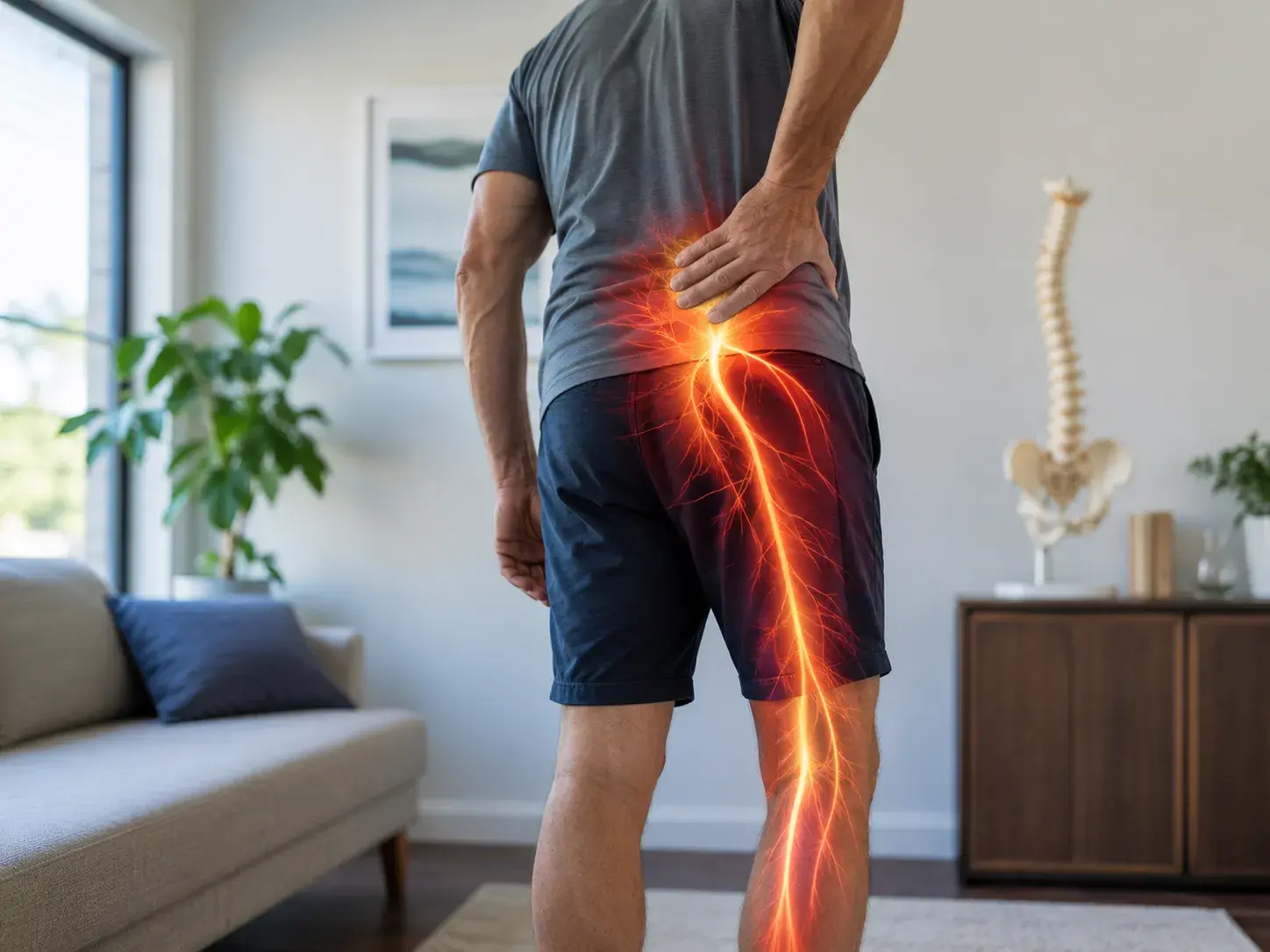
Leg Pain vs. Sciatica: The Direct Answer
Leg pain may be sciatica when it feels sharp, burning, electric, tingling, numb, or shooting and appears to travel from the lower back or buttock down one leg. But not all leg pain is sciatica. Muscle strain, hip problems, knee pain, arthritis, peripheral neuropathy, circulation issues, and other conditions can create leg symptoms that feel similar.
The pattern matters. Where the pain starts, how it travels, whether it affects one leg or both, what makes it worse, and whether numbness, tingling, or weakness is present can help a qualified clinician understand what may be causing your symptoms.
At Valley Dolor Pain Management, we help patients in Newburgh, NY, the Hudson Valley, and across New York through eligible mobile service options understand their pain and take the next appropriate step. Our approach focuses on medically responsible pain evaluation, non-surgical care when appropriate, and personalized treatment planning.
Leg Pain Is Common, But the Cause Matters
Many people use the word “sciatica” for almost any pain that travels into the leg. But aching legs, burning feet, calf pain, thigh pain, hip pain, knee pain, muscle cramps, and nerve pain are not automatically sciatica.
That distinction matters because the right treatment depends on the source of the pain. A pulled muscle may need a very different plan than nerve irritation from the lower spine. A knee or hip problem may feel like leg pain but require joint-focused evaluation. Circulation-related pain can also feel like leg discomfort and may need urgent attention if it comes with swelling, color changes, coldness, or sudden severe symptoms.
This article explains how sciatica can feel, how it may differ from other types of leg pain, when leg pain should be evaluated urgently, and what to expect during a pain management evaluation at Valley Dolor.
What Is Sciatica?
Sciatica Is a Symptom Pattern, Not a Single Diagnosis
Sciatica describes pain caused by irritation, compression, or inflammation affecting the sciatic nerve or the nerve roots that contribute to it. The pain often begins in the lower back or buttock and travels down the back or side of one leg.
The sciatic nerve is the largest nerve in the body. It forms from nerve roots in the lower spine and travels through the buttock, thigh, calf, and into the foot. When that nerve pathway is irritated, a person may feel pain, numbness, tingling, weakness, burning, or electric-like sensations in the buttock, leg, foot, or toes.
Mayo Clinic describes sciatica pain as ranging from a mild ache to sharp, burning pain or an electric-shock feeling, and notes that numbness, tingling, or muscle weakness can also occur in the affected leg or foot.
Common Causes of Sciatica
Sciatica can happen for several reasons. Common contributors may include:
- Herniated or bulging disc
- Spinal stenosis
- Degenerative disc changes
- Arthritis or bone overgrowth affecting nerve roots
- Spondylolisthesis
- Piriformis-related nerve irritation
- Prior injury or trauma
- Less common but serious causes, such as infection, tumor, or severe nerve compression
A person usually cannot confirm the cause of sciatica based on symptoms alone. A clinician may need to review medical history, examine strength and sensation, assess movement, and review imaging when appropriate.
What Does Sciatica Feel Like?
Sciatica can feel different from person to person. Some patients describe mild tingling. Others describe intense pain that makes it hard to sit, drive, walk, work, or sleep.
Common sciatica symptoms may include:
| Symptom | How It May Feel |
| Radiating pain | Pain that starts in the low back or buttock and travels down the leg |
| Burning pain | A hot, searing, or “on fire” feeling |
| Electric pain | Sharp, shock-like pain down the leg |
| Tingling | Pins-and-needles sensation in the leg, foot, or toes |
| Numbness | Reduced feeling in part of the leg or foot |
| Weakness | Trouble lifting the foot, standing, walking, or using part of the leg normally |
| Movement-related pain | Pain that worsens with sitting, bending, coughing, sneezing, twisting, or lifting |
Cleveland Clinic explains that sciatica pain can feel burning or electric and may shoot down one leg. It may also come with numbness, tingling, or muscle weakness.
Does Sciatica Affect One Leg or Both?
Sciatica often affects one side of the body. Pain may begin in the lower back or buttock and travel into one thigh, calf, foot, or toes.
Pain in both legs does not automatically mean sciatica. Bilateral symptoms can happen with some spine conditions, but they deserve careful assessment, especially if they come with weakness, numbness, trouble walking, or bladder or bowel changes.
Leg Pain vs. Sciatica: How the Patterns Differ
This is the most important part: sciatica is only one possible cause of leg pain. Other conditions can feel similar, especially when pain is burning, aching, or hard to describe.
Sciatica vs. Muscle Pain
Muscle-related leg pain often feels sore, tight, crampy, or aching. It may happen after exercise, overuse, lifting, walking more than usual, or a specific strain.
Sciatica-like pain is more likely to feel nerve-related: burning, electric, shooting, tingling, numb, or radiating. It may begin in the lower back or buttock and travel down the leg.
| Feature | Sciatica-Like Pain | Muscle-Related Leg Pain |
| Pain quality | Burning, electric, shooting, tingling, numb | Aching, soreness, tightness, cramping |
| Starting point | Often low back or buttock | Often a specific muscle group |
| Pain pattern | May travel down one leg | Usually stays near the strained muscle |
| Neurological symptoms | Tingling, numbness, or weakness may occur | Usually absent |
| Common triggers | Sitting, bending, coughing, sneezing, twisting | Activity, overuse, direct strain |
| Evaluation need | Assess for nerve involvement | Assess if severe, persistent, swollen, weak, or unexplained |
If your leg pain is recurring, worsening, or includes numbness or weakness, it is worth getting evaluated instead of assuming it is only a pulled muscle.
Sciatica vs. Peripheral Neuropathy
Peripheral neuropathy affects nerves outside the brain and spinal cord. It can cause burning, tingling, numbness, pain, or altered sensation, often in the feet or lower legs.
Unlike classic sciatica, peripheral neuropathy may affect both feet or both legs and may not follow a single pathway from the lower back or buttock. It may be associated with conditions such as diabetes, alcohol use, vitamin deficiencies, medication effects, injury, or other medical issues.
Cleveland Clinic notes that peripheral neuropathy can cause burning, pain, tingling, or numbness in the foot or lower leg and can be associated with conditions such as diabetes or alcohol-use disorder.
If your symptoms are mostly in both feet, feel like burning or numbness, or are linked to a known medical condition, neuropathy may be one possibility to discuss with a clinician.
Sciatica vs. Circulation-Related Leg Pain
Circulation-related leg pain can sometimes be mistaken for nerve pain. It may cause cramping, heaviness, aching, swelling, skin color changes, coldness, or pain that appears with walking and improves with rest.
Seek prompt medical care if leg pain comes with sudden swelling, color changes, coldness, loss of pulse, severe unexplained pain, or symptoms that feel urgent. These signs should not be dismissed as routine sciatica.
Sciatica vs. Hip, Knee, or Joint Pain
Hip, knee, and joint problems can also cause pain that travels into the thigh, leg, or surrounding area. Arthritis, bursitis, tendon injuries, joint inflammation, or knee conditions may create symptoms that overlap with sciatica.
Joint-related pain may be more likely if symptoms are triggered by:
- Hip rotation
- Knee bending
- Stairs
- Weight-bearing
- A specific joint position
- Swelling or stiffness in one joint
- Pain that stays close to the hip, knee, or ankle
For patients dealing with joint-related symptoms, Valley Dolor’s guide on arthritis and joint pain flare-ups may be a helpful next read.
Sciatica vs. Restless Legs, Cramps, or Overuse
Not every uncomfortable leg sensation is nerve compression. Muscle cramps may feel like sudden tightening. Overuse pain may follow unusual activity or exercise. Restless legs symptoms often occur at rest and involve an urge to move the legs.
However, persistent one-sided pain, burning pain, numbness, weakness, or pain traveling from the back or buttock down the leg should be evaluated.
Could Your Leg Pain Be Sciatica? A Symptom-Pattern Checklist
This checklist cannot diagnose sciatica. It can help you decide whether your symptoms are worth discussing with a clinician.
Sciatica May Be More Likely When Pain:
- Starts in the low back, buttock, or hip area
- Travels down one leg
- Feels burning, electric, shooting, tingling, or numb
- Reaches the calf, ankle, foot, or toes
- Gets worse with sitting, bending, coughing, sneezing, or twisting
- Occurs with numbness, tingling, or weakness
- Follows a similar path repeatedly
Another Cause May Be More Likely When Pain:
- Is mainly in one joint
- Is localized to one muscle after activity or injury
- Comes with swelling, redness, warmth, or skin color changes
- Is mostly in both feet
- Happens with walking and improves with rest
- Does not involve the lower back or buttock
- Comes with fever or systemic illness
- Started after a major injury
Again, this is not a self-diagnosis tool. It is a guide to help you recognize patterns that deserve clinical evaluation.
What Causes Sciatica-Like Leg Pain?
Disc-Related Nerve Compression
A herniated or bulging disc can press on or irritate a nerve root in the lower spine. This is one of the better-known causes of sciatica symptoms.
When a nerve root is irritated, pain may travel into the buttock, thigh, calf, foot, or toes. Some people also feel numbness, tingling, or weakness.
Spinal Stenosis
Spinal stenosis means narrowing around the spinal nerves. In the lower back, this can lead to leg pain, numbness, tingling, weakness, or symptoms that worsen with standing or walking.
Some patients feel better when leaning forward or sitting, but the exact pattern varies.
Arthritis and Degenerative Spine Changes
Age-related changes in the spine, arthritis, bone spurs, or disc degeneration can reduce space around nerves and contribute to nerve irritation. These changes do not always cause symptoms, but when they affect nerve roots, they may contribute to sciatica-like pain.
Piriformis-Related Nerve Irritation
The piriformis is a deep muscle in the buttock. In some cases, irritation around this area can create symptoms that feel similar to sciatica. Because symptoms can overlap, evaluation is important before assuming the cause.
Less Common but Serious Causes
Less common causes of sciatica-like symptoms may include infection, tumor, spinal bleeding, severe trauma, cauda equina syndrome, or vascular problems. These are not the most common causes, but they are important because some require urgent care.
When Is Leg Pain an Emergency?
Most leg pain is not an emergency, but certain symptoms should never be ignored.
Seek emergency medical care now if leg pain comes with:
- New loss of bladder or bowel control
- Difficulty starting urination or inability to urinate
- Numbness around the genitals, buttocks, inner thighs, or saddle area
- Sudden or worsening leg weakness
- Major trouble walking or loss of leg function
- Severe symptoms in both legs
- Severe pain after a car accident, fall, or significant trauma
- Fever, chills, unexplained weight loss, or signs of infection with back pain
- New severe pain with swelling, color changes, coldness, or possible circulation problems
- History of cancer plus new severe or unexplained back or leg symptoms
Mayo Clinic advises immediate medical care for sudden leg weakness, bowel or bladder control problems, or pain after a significant injury. NHS guidance also identifies saddle numbness, new bladder or bowel problems, severe or worsening weakness, and symptoms affecting both legs as warning signs that require urgent help.
Emergency Reminder: If you have severe weakness, new bladder or bowel changes, saddle numbness, severe symptoms after trauma, or another medical emergency, call 911 or seek emergency care immediately.
When Should You Schedule a Pain Evaluation?
If your symptoms are not an emergency but are persistent, recurring, or affecting daily life, a pain evaluation may help clarify the next step.
You should consider scheduling an evaluation if:
- Leg pain lasts more than several days or keeps returning
- Pain is worsening
- Symptoms affect walking, sitting, driving, work, or sleep
- You have numbness, tingling, burning, or weakness
- Pain travels from the lower back or buttock down the leg
- Symptoms are not improving with clinician-approved conservative care
- You are unsure whether pain is nerve, muscle, joint, or circulation-related
- You have a history of spine problems
- You recently had an injury
- You want to understand non-surgical pain management options
If your pain began as back pain and is now traveling into the leg, you may also find this guide helpful: Sciatica vs. Back Pain.
If your back pain has continued despite rest and ice, read: 7 Signs Your Back Pain Needs More Than Rest and Ice.
What Happens During a Sciatica or Leg-Pain Evaluation at Valley Dolor?
At Valley Dolor, the goal is not to guess based on symptoms alone. A proper pain evaluation looks at the full picture: where the pain starts, how it travels, what triggers it, medical history, prior imaging, current medications, and functional limitations.
Step 1: Review Your Pain History
Your provider may ask questions such as:
- Where does the pain begin?
- Where does it travel?
- Does it affect one leg or both?
- Does it feel burning, aching, sharp, electric, numb, or weak?
- What makes it worse or better?
- Did it begin after an injury?
- Does it affect sleep, work, walking, or sitting?
- Do you have bladder, bowel, weakness, numbness, or balance symptoms?
These details help determine whether your symptoms may involve nerve irritation, muscle strain, joint pain, neuropathy, or another issue.
Step 2: Physical Assessment
A clinician may assess:
- Range of motion
- Strength
- Reflexes
- Sensation
- Walking pattern
- Posture
- Pain triggers
- Back, hip, knee, and leg movement
- Signs that may suggest nerve involvement
The goal is to understand the likely contributors to your pain and whether additional imaging, testing, referral, or treatment may be appropriate.
Step 3: Individualized Care Plan
Treatment recommendations depend on the evaluation. Your plan may include medication management, interventional pain procedures, rehabilitation recommendations, referrals, or other appropriate care pathways.
Valley Dolor focuses on medically responsible pain management. We do not promise a cure, guarantee results, or treat every patient the same way. The goal is to support pain management, mobility, function, and quality of life through a plan based on symptoms, diagnosis, medical history, and individual needs.
Valley Dolor’s Newburgh Location and Mobile Service Across New York
Valley Dolor is based in Newburgh, NY, serving patients throughout the Hudson Valley and surrounding New York communities. Patients may come to our Newburgh location for evaluation, treatment planning, and ongoing pain management.
For eligible patients, Valley Dolor also offers mobile service across New York. Availability may depend on location, medical need, referral status, provider guidance, and appointment type. Because pain management is medical care, mobile visits and treatment options must be appropriate for the patient’s condition and safety needs.
If you are unsure whether you should visit the Newburgh clinic or ask about mobile service, call Valley Dolor and our team can explain the next steps.
Call Valley Dolor: 845-670-4844
Questions to Ask a Clinician About Leg Pain or Sciatica
If you are preparing for an appointment, these questions can help you have a clearer conversation:
- Does my symptom pattern suggest nerve irritation or another cause?
- Are there any warning signs in my symptoms or medical history?
- Do I need imaging, testing, or a referral?
- What could be contributing to pain down my leg?
- Are my symptoms more consistent with sciatica, neuropathy, muscle pain, hip pain, or circulation problems?
- What activities should I avoid or modify?
- Which treatment options may be appropriate for my situation?
- What symptoms should make me seek urgent or emergency care?
- How can I track whether symptoms are improving or worsening?
- What are the next steps if initial treatment does not help?
Related Symptoms and Conditions
Leg pain may be connected to several other pain patterns. These related Valley Dolor resources may help you understand your symptoms more clearly:
| Symptom or Concern | Helpful Valley Dolor Resource |
| Pain from sitting, posture, or desk work | Neck Pain at Your Desk: Causes, Prevention, and Treatment |
| Joint pain or arthritis flare-ups | Arthritis and Joint Pain: Non-Surgical Ways to Manage Flare-Ups |
| Back pain that is not improving | 7 Signs Your Back Pain Needs More Than Rest and Ice |
| Back pain vs. sciatica symptoms | Sciatica vs. Back Pain |
| Starting care at Valley Dolor | Feeling Better Is Within Your Reach |
FAQs About Leg Pain and Sciatica
Can leg pain be sciatica without back pain?
Yes, sciatica can sometimes be felt mainly in the buttock or leg, even if low back pain is mild or not obvious. However, leg pain without back pain can also come from muscles, joints, nerves, circulation, or other causes. A clinical evaluation is needed to identify the likely source.
What does sciatica leg pain feel like?
Sciatica may feel sharp, burning, electric, shooting, tingling, numb, or radiating. It often starts in the lower back or buttock and travels down one leg. Some people also experience weakness or reduced sensation in the leg or foot.
Does sciatica affect one leg or both legs?
Sciatica commonly affects one leg. Symptoms in both legs can occur with some spine conditions, but they should be evaluated carefully, especially if there is weakness, numbness, trouble walking, or bladder or bowel changes.
How do I know if leg pain is sciatica or a muscle strain?
Muscle strain often feels sore, tight, crampy, or localized after activity or injury. Sciatica is more likely to feel burning, electric, shooting, tingling, numb, or radiating from the lower back or buttock down the leg. Diagnosis requires an exam.
Can sciatica cause calf pain?
Yes. Sciatic nerve irritation can create pain that travels into the buttock, thigh, calf, foot, or toes, depending on which nerve pathway is affected. Calf pain can also come from muscle strain, circulation issues, or other causes, so persistent symptoms should be evaluated.
Can sciatica cause tingling or numbness in the foot?
Yes. Tingling, numbness, or pins-and-needles sensations can happen when a nerve is irritated. If these symptoms are persistent, worsening, or associated with weakness, they should be assessed by a clinician.
When is sciatica dangerous?
Sciatica may be dangerous if it comes with new bladder or bowel changes, saddle numbness, sudden or worsening weakness, severe symptoms in both legs, major trouble walking, fever, unexplained weight loss, or severe pain after trauma. These symptoms require urgent or emergency care.
Can poor circulation feel like sciatica?
Yes, circulation problems can sometimes cause leg pain, cramping, heaviness, or discomfort that may be confused with nerve pain. Pain with swelling, color changes, coldness, sudden severe symptoms, or loss of pulse should be evaluated urgently.
When should I see a pain-management clinician for leg pain?
You should consider seeing a pain-management clinician if leg pain is persistent, recurring, worsening, limiting work or sleep, affecting walking, or associated with numbness, tingling, burning, weakness, or pain traveling from the back or buttock down the leg.
Medical Review, Evidence, and Update Policy
This article should be reviewed regularly and updated if:
- Valley Dolor’s services change
- Mobile service availability changes
- Referral or appointment policies change
- Emergency guidance needs revision
- New clinical guidelines or evidence become available
- Medical reviewer information changes
Not Sure What Is Causing Your Leg Pain?
Leg pain can come from many sources. A pain evaluation can help assess whether your symptoms may involve sciatica, nerve irritation, muscle strain, joint problems, neuropathic pain, circulation concerns, or another condition that needs attention.
At Valley Dolor Pain Management, we help patients in Newburgh, the Hudson Valley, and eligible mobile-service areas across New York understand their symptoms and explore medically responsible next steps.
Request a Pain Evaluation
Explore Sciatica vs. Back Pain
Call Valley Dolor: 845-670-4844
If you have severe weakness, new bowel or bladder changes, saddle numbness, severe symptoms after trauma, or another medical emergency, call 911 or seek emergency care immediately.