Pain Management
Ice or Heat for Back Pain: Which Should You Use?
October 12, 2026 · 7 min read
Medical note: This article provides general education and does not diagnose the cause of back pain or replace individual medical advice. Seek urgent medical care for severe trauma, new bowel or bladder problems, numbness around the groin or inner thighs, rapidly worsening weakness, or other severe symptoms.
Ice or Heat for Back Pain?
A simple rule can help:
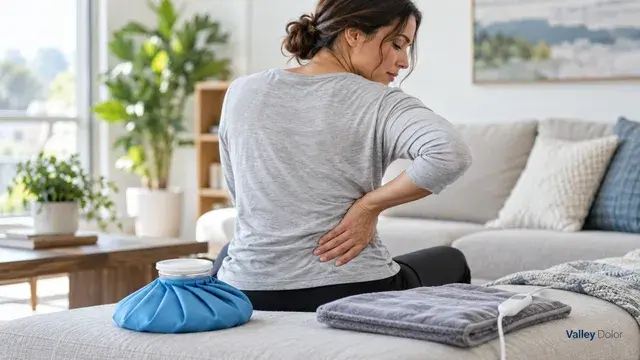
Try ice for new back pain after lifting, twisting, exercise, or a minor strain—especially if the area feels freshly sore or irritated. Try heat when the main problem is stiffness, muscle tightness, or an ongoing ache.
Both ice and heat can provide temporary comfort. Neither identifies or treats the underlying cause of persistent, severe, or nerve-related back pain.
If your lower-back pain is affecting work, sleep, walking, or daily movement, Valley Dolor provides pain-management evaluations in Newburgh for patients across the Hudson Valley.
Learn About Back Pain Treatment
Quick Answer: When to Use Ice vs. Heat
| Try Ice When… | Try Heat When… |
| Pain started recently after lifting, twisting, a fall, or exercise | Your back feels tight, stiff, achy, or in spasm |
| The area feels freshly sore or irritated | Pain has lasted more than a couple of days or keeps returning |
| You want short-term numbing relief after activity | You want to loosen tight muscles before gentle movement |
| You overdid a workout or physical activity | You wake up stiff or feel tension after prolonged sitting |
Simple takeaway
New strain or fresh soreness → try ice first.
Stiffness or muscle tension → try heat.
If either option makes your symptoms worse, stop.
Use Ice for New Back Pain After Lifting or Activity
Cold therapy may be useful after a new strain, awkward lift, twist, fall, or unusually demanding workout.
Ice may temporarily numb soreness and make a newly irritated area feel more comfortable.
Examples include back pain after:
- Moving furniture
- Lifting at work
- Weight training
- Yard work
- Carrying heavy boxes
- Twisting suddenly
- Starting a new exercise
- Overdoing a workout
How to use ice safely
- Wrap the cold pack in a thin towel.
- Do not place ice directly on bare skin.
- Use it for about 15–20 minutes at a time.
- Allow your skin to return to normal temperature before using it again.
- Do not fall asleep with an ice pack in place.
- Stop if your skin becomes very pale, painful, numb, blistered, or irritated.
The goal is short-term comfort, not “healing” the injury or preventing tissue damage.
If your back pain started after lifting and continues instead of improving, this broader guide may help: Lower Back Pain: Common Causes, Warning Signs and When to Seek Care.
Use Heat for Back Stiffness and Muscle Tightness
Heat is often more comfortable when your back feels:
- Tight
- Stiff
- Cramped
- Achy
- Sore after long sitting
- Stiff when you wake up
- Tense after a long workday
Heat can help you feel more comfortable before gentle walking or movement.
Options may include:
- Warm shower
- Warm bath
- Heating pad
- Warm towel
How to use heat safely
- Use mild—not intense—heat.
- Limit a session to roughly 15–20 minutes.
- Keep a protective layer between your skin and the heat source.
- Never sleep with a heating pad.
- Stop if the skin becomes overly red, painful, irritated, or numb.
Heat should help you feel more comfortable moving. It should not be used to force yourself through severe pain.
If you regularly wake with lower-back stiffness, see Why Does My Back Hurt When I Wake Up?.
Can You Alternate Ice and Heat?
Yes. Some people prefer one, while others find both useful at different times.
You do not need a complicated ice-and-heat schedule.
A practical approach is:
Fresh pain after exertion or minor injury: try cold first.
Muscle tightness or stiffness: try heat.
If the nature of your symptoms changes over the next day or two, you can try the other option and see which feels more comfortable.
Give your skin enough time to return to its normal temperature between applications.
Most importantly, do not keep using a treatment that clearly makes your pain worse.
How to Use Ice or Heat Safely
Whether you choose cold or heat:
- Keep a cloth barrier between your skin and the pack or heating source.
- Limit applications to about 15–20 minutes.
- Do not use heat or ice on broken or infected skin.
- Do not fall asleep with either treatment in place.
- Stop if symptoms worsen.
- Stop if the skin becomes very red, pale, blistered, or unusually numb.
Talk with a clinician before using heat or cold if you have:
- Reduced skin sensation
- Peripheral neuropathy
- Diabetes-related nerve damage
- Significant circulation problems
- Difficulty sensing hot or cold temperatures
These conditions can increase the risk of skin injury.
Ice and Heat May Not Be Enough for Sciatica
Ice or heat may temporarily ease lower-back discomfort, but they are often not enough when symptoms involve a nerve.
Sciatica-like pain may:
- Start in the lower back or buttock
- Travel down one leg
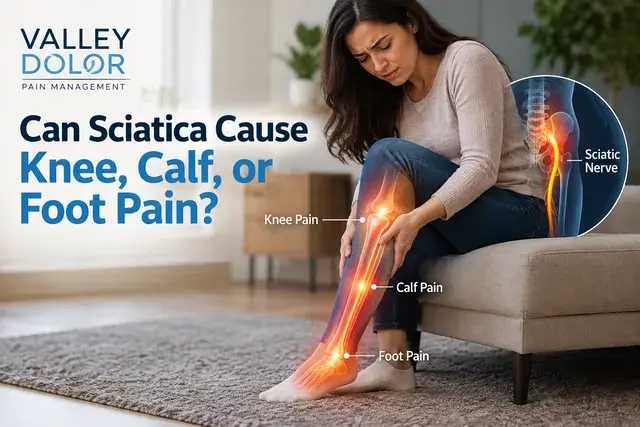
- Reach the thigh, knee, calf, foot, or toes
- Feel sharp, shooting, electric, or burning
- Include tingling
- Include numbness
- Include weakness
If pain travels down your leg, read When Is Leg Pain Actually Sciatica?.
You can also learn more about Sciatica Treatment.
Do not assume that every leg symptom is sciatica. Leg pain can also come from muscles, joints, circulation problems, peripheral nerves, or other conditions.
For a broader comparison, see Leg Pain Causes: Muscle, Joint, Nerve, and Circulation Differences.
When Ice and Heat Are Not Enough
Home care may be reasonable for mild back discomfort without warning signs, but an evaluation becomes more important when pain is persistent or affecting your normal life.
Consider scheduling an evaluation if:
- Pain has not improved after several weeks
- Pain keeps returning
- Back pain repeatedly affects sleep
- Pain interferes with work
- Walking or exercising is becoming difficult
- Pain spreads into the buttock or leg
- You notice numbness or tingling
- You notice weakness
- Pain started after a significant fall or accident
- You are unsure whether the pain is muscle-, joint-, disc-, or nerve-related
For more detail, see 7 Signs Your Back Pain Needs More Than Rest and Ice.
If you want to understand conservative options before considering surgery, read Non-Invasive Back Treatments: What Works Before You Consider Surgery.
Seek Emergency Care for These Back Pain Symptoms
Heat or ice is not appropriate as the only response when serious warning signs are present.
Seek emergency medical care if back pain occurs with:
- New loss of bladder or bowel control
- Difficulty starting urination
- New inability to empty the bladder
- Numbness around the genitals, buttocks, or inner thighs
- Rapidly worsening weakness in one or both legs
- Severe symptoms affecting both legs
- New inability to walk safely
- Major trauma
- Severe back pain after a car accident or fall
- Other severe or rapidly worsening symptoms
These symptoms can indicate serious nerve compression or another urgent medical condition.
If you believe you are experiencing an emergency, call 911.
What About Bed Rest?
Long periods of complete bed rest are generally not the goal for routine uncomplicated back pain.
If movement is tolerable and there are no warning signs, gentle activity and changing position may be more appropriate than staying in bed for long periods.
That does not mean you should push through severe pain.
Instead:
- Change positions periodically.
- Avoid movements that clearly aggravate symptoms.
- Break physical activities into shorter periods.
- Avoid heavy lifting while symptoms are flared.
- Seek evaluation if movement causes increasing leg pain, numbness, or weakness.
Ice or Heat for Different Back Pain Patterns
| Situation | What You Might Try |
| New soreness after lifting | Ice |
| Back pain after an unusually hard workout | Ice |
| Morning stiffness | Heat |
| Tight lower-back muscles after sitting | Heat |
| Mild muscle spasm | Heat may feel more comfortable |
| New pain after a twist | Ice may be reasonable initially |
| Recurring aching back pain | Heat may provide comfort, but recurring pain should be evaluated |
| Pain traveling down the leg | Neither should replace assessment |
| Numbness or weakness | Seek clinical evaluation |
| Severe neurologic symptoms | Emergency medical care |
Remember: this is a comfort guide, not a diagnosis tool.
Frequently Asked Questions
Should I use ice or heat for back pain after lifting?
If the pain is new after lifting and feels freshly sore or irritated, you can try ice first. Use a cloth-wrapped cold pack for approximately 15–20 minutes at a time.
If stiffness or muscle tightness becomes the main problem later, gentle heat may feel more comfortable.
Is heat good for lower-back pain?
Heat may help some people when lower-back pain feels tight, stiff, cramped, or achy.
Use mild heat for a short period and avoid sleeping with a heating pad.
Persistent or recurrent pain should still be evaluated.
Can ice make back pain worse?
Yes, for some people.
Cold can sometimes feel uncomfortable or make muscles feel stiffer. Stop if ice increases pain, creates prolonged numbness, or irritates your skin.
Never place ice directly on bare skin.
Should I use ice or heat for sciatica?
Either may provide temporary comfort for some people, but neither treats the cause of nerve-related symptoms.
If pain travels from your lower back into the buttock, leg, calf, or foot—or comes with tingling, numbness, or weakness—consider a clinical evaluation.
Read more: When Is Leg Pain Actually Sciatica?.
The Bottom Line
Use ice for new lower-back pain after lifting, twisting, exercise, or a minor strain when the area feels freshly sore or irritated.
Use heat when the main problem is stiffness, muscle tightness, or recurring aching.
Apply either method for short periods, protect your skin, and stop if symptoms worsen.
If back pain persists, travels into the leg, repeatedly interferes with sleep or work, or comes with numbness or weakness, a professional evaluation can help determine what may be contributing.
Valley Dolor provides individualized pain-management care in Newburgh, NY, for patients with back pain, sciatica, leg pain, and chronic pain concerns.