Pain Management
Knee Pain When Walking or Climbing Stairs: Common Causes to Discuss
August 26, 2026 · 13 min read · By elham
Knee Pain When Walking or Climbing Stairs
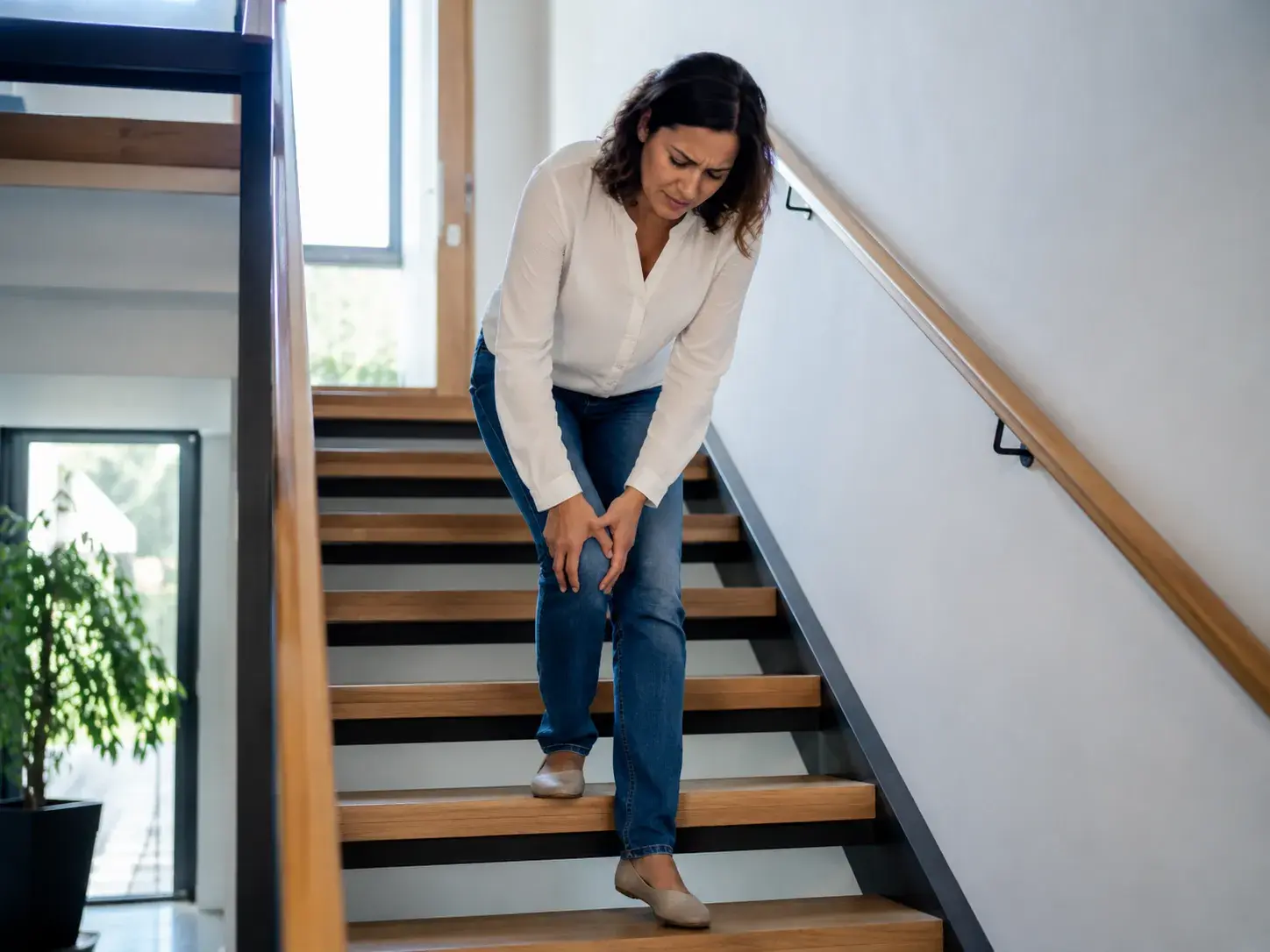
Knee pain that appears while walking, climbing stairs, squatting, standing up from a chair, or going downhill can make ordinary movement feel difficult. The pattern of pain matters. Where it occurs, when it begins, whether swelling or stiffness is present, and whether there was an injury can give a clinician useful clues about what may be contributing.
Some people notice pain at the front of the knee around the kneecap, especially on stairs. Others feel aching, stiffness, or swelling that develops gradually and makes walking or climbing steps harder over time. These patterns can occur with conditions such as knee osteoarthritis or patellofemoral pain, but an evaluation is important because knee pain may also relate to injury, tendon problems, meniscal conditions, inflammatory disease, referred pain, nerve-related symptoms, or other causes.
At Valley Dolor Pain Management in Newburgh, NY, we help patients understand their pain pattern and discuss appropriate next steps through individualized pain evaluation and care planning.
Request a Knee Evaluation
Call Valley Dolor: 845-670-4844
Direct Answer: Why Does My Knee Hurt When I Walk or Climb Stairs?
Knee pain when walking or climbing stairs may occur for several reasons. Two common patterns include knee osteoarthritis, which may involve activity-related aching, stiffness, swelling, or reduced motion, and patellofemoral pain, which often causes pain around or behind the kneecap during stairs, squatting, prolonged sitting, or other bent-knee activities.
However, knee pain cannot be diagnosed by activity pattern alone. A clinician can assess the pain location, physical function, medical history, prior injuries, swelling, stability, nerve symptoms, and whether imaging or referral may be appropriate.
Knee pain affecting daily movement?
Valley Dolor in Newburgh offers individualized pain evaluations and care planning. A referral may be required before scheduling depending on the clinic’s current process.
Request a Knee Evaluation
Or call 845-670-4844.
Why Stairs and Walking Can Make Knee Pain Noticeable
Walking and stair climbing place repeated load through the knee. Every step requires the knee to bend, straighten, absorb force, and coordinate with the hip, ankle, foot, and surrounding muscles.
Stairs can make knee symptoms more obvious because the knee has to work harder than it does on flat ground. Climbing stairs increases the demand on the quadriceps, kneecap area, and knee joint. Going down stairs may be especially uncomfortable for some people because the leg muscles must control the body’s movement while the knee remains bent.
This does not mean that pain on stairs confirms one specific condition. But it is useful information to share during a clinical evaluation.
Knee pain may feel worse during:
- Walking longer distances
- Going up stairs
- Going down stairs
- Standing from a chair
- Squatting
- Kneeling
- Getting in and out of a car
- Walking downhill
- Carrying groceries or heavy items
- Exercising after a period of inactivity
The more clearly you can describe when the pain appears, the easier it is for a clinician to understand the pattern.
Common Knee Pain Patterns to Discuss With a Clinician
The location, timing, severity, and accompanying symptoms of knee pain can help narrow the clinical discussion. The patterns below are examples, not self-diagnoses.
Pattern 1: Pain at the Front of the Knee or Around the Kneecap
Some patients feel pain in front of, underneath, or around the kneecap. This may become more noticeable when climbing stairs, going down stairs, squatting, lunging, kneeling, or standing up from a chair.
You may notice:
- Pain in front of the knee
- Pain behind or around the kneecap
- Discomfort when going up or down stairs
- Pain with squatting or kneeling
- Pain after sitting with the knee bent for a long time
- Symptoms that increase with running, jumping, or repeated knee-bending activity
- A grinding or pressure-like feeling around the kneecap
One possible condition to discuss is patellofemoral pain, which is often associated with pain around or behind the kneecap during activities that load a bent knee.
However, front-of-knee pain on stairs does not automatically mean patellofemoral pain. A clinician considers the full history and examination, including injury history, alignment, strength, range of motion, swelling, tenderness, and other possible sources of pain.
Pattern 2: Gradual Aching, Stiffness, or Swelling With Activity
Some knee pain develops gradually. It may begin as occasional discomfort and slowly become more noticeable during walking, stairs, standing, or prolonged activity.
You may notice:
- Aching with walking or stairs
- Stiffness after rest
- Morning stiffness that improves after movement
- Swelling that comes and goes
- Reduced ability to bend or straighten the knee
- Grinding, clicking, or creaking sensations
- Difficulty walking longer distances
- Difficulty kneeling or getting up from a chair
One possible condition to discuss is knee osteoarthritis, especially when pain is activity-related and accompanied by stiffness, reduced motion, swelling, or functional difficulty. But age alone does not diagnose arthritis, and imaging findings do not always match pain severity.
A clinician may consider symptoms, exam findings, function, history of injury, swelling, stiffness, and whether imaging is appropriate.
If you are also dealing with joint flare-ups, stiffness, or arthritis-type symptoms, this related guide may help: Arthritis and Joint Pain: Non-Surgical Ways to Manage Flare-Ups.
Pattern 3: Pain After a Twist, Fall, Impact, or Sudden Change in Activity
Knee pain after an injury needs careful attention. A twist, fall, sports injury, work injury, or motor-vehicle accident can affect ligaments, tendons, cartilage, bones, or soft tissues.
You may notice:
- Sudden pain after twisting or pivoting
- Swelling after an injury
- A feeling that the knee catches or locks
- Buckling or giving way
- Pain after a fall or impact
- Difficulty bearing weight
- Pain that worsens instead of improving
Possible causes can include ligament sprain, meniscus injury, fracture, tendon injury, or other traumatic conditions. These cannot be distinguished safely online.
After a knee injury, seek prompt medical assessment if you cannot bear weight, the knee appears deformed, swelling is severe or rapid, the knee locks, you have numbness or weakness, or symptoms are worsening.
Pattern 4: Pain Below the Kneecap, at the Side, or Behind the Knee
Pain location can be relevant, but it is not diagnostic by itself.
Different areas may suggest different clinical questions:
- Below the kneecap: May involve tendon or soft-tissue structures.
- Inner or outer knee: May relate to joint structures, ligaments, meniscus, overuse, or other causes.
- Behind the knee: May occur with several joint, soft-tissue, or circulation-related conditions.
- Pain that starts in the hip, buttock, or lower back and travels down the leg: May need assessment for referred pain or nerve-related symptoms.
If your pain travels from the lower back or buttock into the leg, it may have a different pattern than knee-joint pain. You may want to read Sciatica vs. Back Pain or Lower Back Pain: Common Causes, Warning Signs and When to Seek Care.
Knee Osteoarthritis vs. Patellofemoral Pain
Only an examination can help determine the likely cause of knee pain. Still, this comparison can help you describe your symptoms more clearly during an appointment.
| Feature | Knee Osteoarthritis: Pattern to Discuss | Patellofemoral Pain: Pattern to Discuss |
| Common pain area | May be felt in or around the joint; location varies | Often in front of, behind, or around the kneecap |
| Typical timing | Often worsens with activity and may cause stiffness after rest | Often worsens with stairs, squatting, running, jumping, or prolonged sitting |
| Possible symptoms | Aching, stiffness, reduced motion, swelling, crepitus, functional difficulty | Anterior knee pain with bent-knee loading; sometimes grinding or discomfort around the kneecap |
| Clinical context | More common with increasing age, prior injury, joint changes, body-weight factors, or repetitive loading, but requires assessment | Often linked to knee loading during bent-knee activities; clinical exam considers function and other causes |
| How it is assessed | History, functional limitations, exam, and imaging if clinically indicated | History, activity-related pain, exam, and imaging only when indicated |
| What not to assume | Pain severity does not always match imaging findings | Pain on stairs alone does not confirm the diagnosis |
The key point: the same symptom can have different causes in different people. That is why knee pain treatment should be based on evaluation, not guesswork.
For more on non-surgical options, read: Knee Pain Without Surgery: Non-Invasive Treatment Options Explained.
What a Knee Evaluation May Include
A knee evaluation is designed to understand your symptoms, function, history, and risk factors before deciding on a treatment plan.
Medical History
A clinician may ask:
- When did the pain begin?
- Did it start gradually or after an injury?
- Where exactly is the pain?
- Is it worse walking, climbing stairs, descending stairs, squatting, kneeling, standing, or sitting?
- Does the knee swell, lock, catch, buckle, or feel unstable?
- Is there morning stiffness? If so, how long does it last?
- Is pain affecting sleep?
- Have there been prior knee injuries, surgeries, falls, or repetitive work demands?
- Have activity levels, footwear, exercise, weight, medications, or health conditions changed?
- Are there symptoms in other joints?
- Are there fever, redness, warmth, numbness, calf swelling, or unexplained weight loss?
Physical Examination
The clinician may assess:
- Walking pattern
- Functional movement
- Swelling, redness, warmth, or visible deformity
- Range of motion
- Tenderness
- Knee alignment
- Stability
- Strength and muscle control
- Pain with sitting to standing, step-up movement, squatting, or walking
- Hip, lower-back, leg, or nerve-related contributions when relevant
Because knee pain may be connected to the hip, back, gait, or nerve symptoms, a complete evaluation may include more than the knee alone.
Imaging and Other Tests
Not every person with knee pain needs the same tests. Depending on the clinical findings, a clinician may recommend imaging or other testing to help clarify suspected causes, rule out certain conditions, guide treatment planning, or investigate concerning symptoms.
Imaging may be considered when there is trauma, significant swelling, mechanical locking, suspected structural injury, persistent symptoms, unclear diagnosis, or treatment planning needs.
Treatment Planning
The appropriate plan depends on the diagnosis, severity, medical history, functional goals, other health conditions, and prior treatments.
A knee pain care plan may include:
- Education about likely pain contributors
- Activity modification
- Physical therapy or rehabilitation referral
- Medication review when appropriate
- Bracing or support options
- Imaging or specialist referral if needed
- Interventional pain management discussion when appropriate
- Follow-up monitoring
At Valley Dolor, the goal is to create an individualized plan based on the patient’s symptoms, medical history, evaluation findings, and goals.
When Knee Pain Needs Urgent Medical Attention
Seek urgent medical care or call 911 if appropriate if you have knee pain with:
- Inability to bear weight after an injury
- Visible deformity
- A hot, red, very swollen knee, especially with fever or feeling unwell
- Rapid or severe swelling after injury
- New numbness, weakness, or loss of circulation symptoms
- A knee that is truly locked and cannot move normally
- Severe pain that is worsening quickly
- Calf swelling, redness, or pain, especially with chest pain or shortness of breath
- Persistent unexplained night pain
- Unexplained weight loss
- History of cancer with new concerning symptoms
Valley Dolor is not an emergency department. If symptoms feel urgent or severe, seek emergency care rather than waiting for a routine appointment.
Questions to Bring to a Knee Evaluation
A good appointment starts with clear questions. Consider asking:
- What are the most likely causes of my pain pattern?
- Does my pain appear to come from the knee joint, kneecap area, tendon, soft tissue, lower back, hip, or another source?
- Do I need imaging or another test?
- What activities should I modify temporarily?
- What movement, rehabilitation, or physical-therapy recommendations may be appropriate?
- Are there treatments that may help manage pain and improve function?
- Could my medications or other health conditions affect treatment options?
- What changes should prompt urgent care?
- What are realistic treatment goals for walking, stairs, work, exercise, or sleep?
- When should I follow up if symptoms do not improve?
These questions can help keep the conversation focused on safety, function, and realistic next steps.
Preparing for Your Appointment at Valley Dolor
Before your appointment, gather information that may help your provider understand your symptoms and medical history.
Bring:
- Photo ID
- Insurance card or cards
- List of current medications and dosages
- Relevant medical records
- Imaging results or reports if available
- Completed patient forms if required
- Notes about when symptoms started
- Notes about swelling, locking, instability, injury, or falls
- Questions you want to ask
If knee pain is limiting walking, stairs, work, sleep, or daily activities, a knee evaluation can help clarify the pattern and discuss appropriate next steps.
Request an Appointment
Call 845-670-4844
How Knee Pain Can Connect to Other Pain Conditions
Knee pain may be part of a broader pain picture. Some patients have knee pain along with back pain, leg pain, arthritis, sciatica-like symptoms, or chronic pain.
These related Valley Dolor resources may help:
| Concern | Helpful Resource |
| Knee pain treatment options | Knee Pain Without Surgery: Non-Invasive Treatment Options Explained |
| Lower back pain and warning signs | Lower Back Pain: Common Causes, Warning Signs and When to Seek Care |
| Back pain before considering surgery | Non-Invasive Back Treatments: What Works Before You Consider Surgery |
| Neck pain and desk posture | Neck Pain at Your Desk: Causes, Prevention, and Treatment |
| Arthritis and joint flare-ups | Arthritis and Joint Pain: Non-Surgical Ways to Manage Flare-Ups |
| Back pain that is not improving | 7 Signs Your Back Pain Needs More Than Rest and Ice |
| Back pain vs. sciatica | Sciatica vs. Back Pain |
| Start care at Valley Dolor | Feeling Better Is Within Your Reach |
Valley Dolor’s Newburgh Clinic and Mobile Service Across New York
Valley Dolor is based in Newburgh, NY, serving patients throughout the Hudson Valley. Patients may visit the Newburgh clinic for evaluation, treatment planning, and ongoing pain management.
For eligible patients, Valley Dolor also offers mobile service across New York. Availability may depend on location, medical need, referral status, provider guidance, and appointment type.
Because pain management is medical care, every plan should be appropriate for the patient’s symptoms, safety needs, medical history, and clinical findings.
Frequently Asked Questions
Why does my knee hurt when I walk?
Knee pain with walking can occur for several reasons, including joint changes, overuse, injury, tendon or soft-tissue problems, kneecap-area pain, referred pain, or inflammatory conditions. The location, timing, swelling, stiffness, injury history, and other symptoms help guide evaluation.
Why does my knee hurt when I climb stairs?
Stair climbing places increased demand on a bent knee. Pain with stairs may occur with patellofemoral pain, osteoarthritis, tendon or soft-tissue conditions, prior injury, or other causes. Pain around or behind the kneecap during stairs or squatting is one pattern clinicians consider during evaluation.
Is knee pain going down stairs different from knee pain going up stairs?
The difference can be useful to mention during an evaluation. Some people find that descending stairs is especially painful because the knee remains bent while the leg muscles control the body’s movement. However, the pattern alone cannot diagnose the cause.
Does knee pain when walking mean I have arthritis?
No. Osteoarthritis is one possible cause of activity-related knee pain, but pain with walking can also relate to other joint, soft-tissue, injury-related, nerve-related, inflammatory, or referred-pain conditions. A clinical assessment is needed.
When should I see a clinician for knee pain?
Consider evaluation if pain persists, recurs, limits walking or stairs, causes swelling or stiffness, affects sleep or work, follows an injury, or is not improving. Seek urgent care for inability to bear weight after injury, marked redness or warmth, severe swelling, fever, deformity, or neurological symptoms.
Will I need an X-ray or MRI?
Not necessarily. The need for imaging depends on your clinical history, examination, suspected cause, treatment planning, and whether urgent or unusual conditions need to be considered.
What should I bring to my first appointment?
Bring photo ID, insurance card or cards, a medication list, relevant records or imaging, and completed forms if required. It also helps to bring notes about when the pain started, what makes it worse, and whether the knee swells, locks, catches, or gives way.
Can back pain or sciatica cause knee pain?
Sometimes pain felt near the knee may be referred from the back, hip, or nerves. If knee-area pain occurs with lower back pain, buttock pain, leg pain, numbness, tingling, or burning symptoms, tell your clinician during the evaluation.
Can knee pain improve without surgery?
Many causes of knee pain can be managed with non-surgical care, but this depends on the diagnosis, severity, injury type, function, and response to treatment. Surgery may still be appropriate for some injuries or advanced conditions.
Is it safe to keep walking with knee pain?
It depends on the cause and severity of symptoms. Mild discomfort may allow modified activity, but pain after injury, severe swelling, instability, inability to bear weight, numbness, weakness, or worsening symptoms should be evaluated before continuing activity.
Medical Review and Evidence Policy
This page should be updated when:
- Valley Dolor’s services change
- Referral or appointment processes change
- Clinical guidance changes
- Medical reviewer information changes
- New evidence affects treatment descriptions
- The clinic adds or removes procedures mentioned on the page
All treatment language should be reviewed before publication. Avoid claims such as “guaranteed relief,” “fix the root cause,” “cure,” or “avoid surgery forever.” Use language such as “may help,” “may be considered,” “depends on evaluation,” and “when appropriate.”
Knee Pain Should Not Be Ignored When It Limits Daily Movement
If walking, stairs, standing, work, or sleep are becoming harder because of knee pain, an evaluation can help clarify the pattern and discuss appropriate next steps.
Valley Dolor provides individualized pain-management evaluations and care planning for people experiencing chronic pain and mobility limitations in Newburgh, the Hudson Valley, and eligible mobile-service areas across New York.
Read About Knee Pain Treatment Without Surgery
Call 845-670-4844
For a medical emergency, call 911 or go to the nearest emergency department.