
Pain Management
Leg Pain Causes: Muscle, Joint, Nerve, and Circulation Differences
August 28, 2026 · 13 min read · By elham
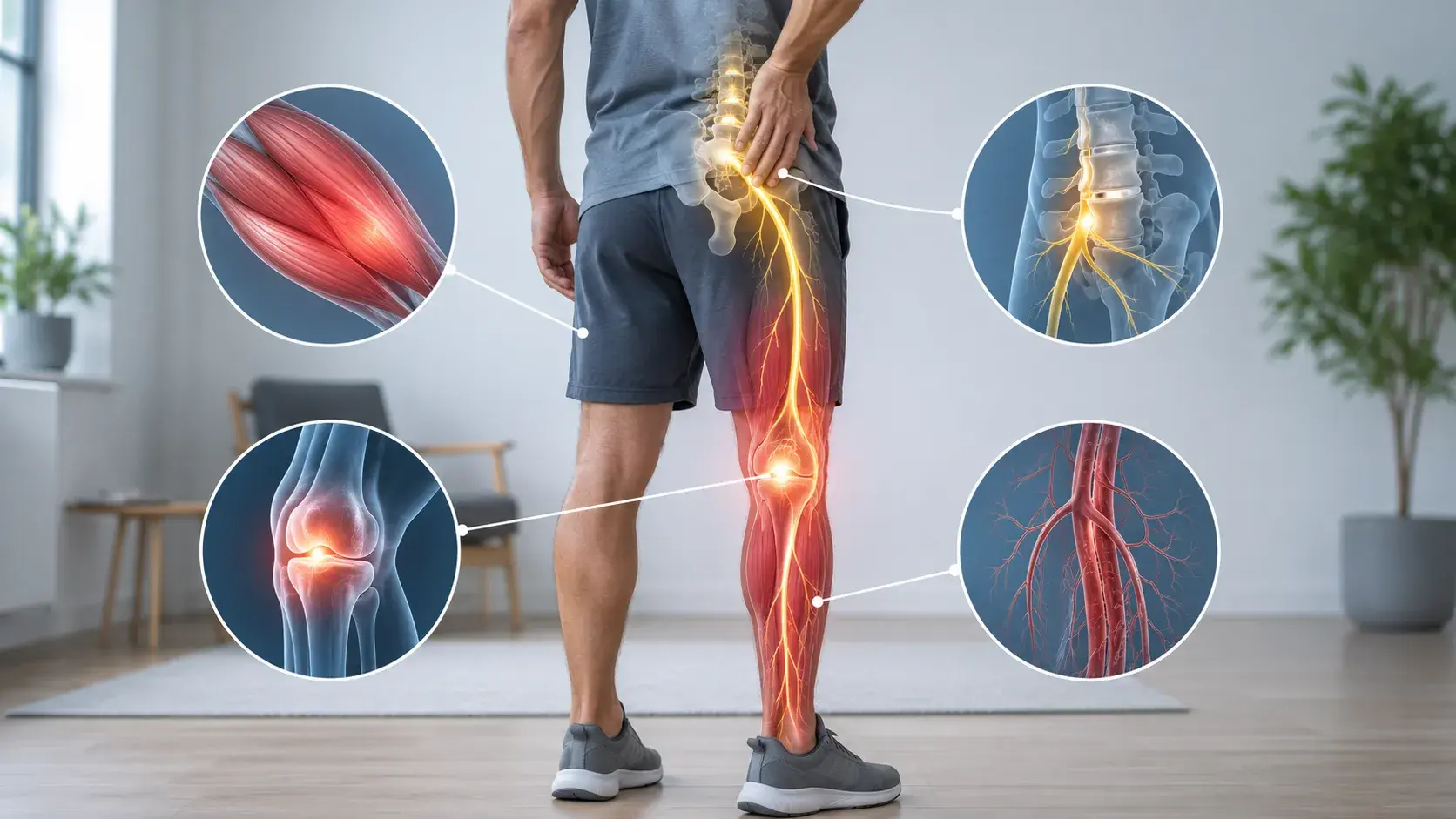
Leg Pain Can Have More Than One Cause
Leg pain can feel like an ache, cramp, burning sensation, sharp pain, heaviness, tingling, numbness, stiffness, or weakness. It may begin suddenly after an injury, develop gradually with activity, or appear alongside back pain, swelling, skin changes, or other symptoms.
Because the leg contains muscles, joints, tendons, ligaments, nerves, blood vessels, and bone, several different conditions can produce pain in a similar area. Some leg pain is related to muscle strain, overuse, a joint problem, or nerve irritation. Other patterns can involve circulation and need more urgent attention, especially when one leg becomes swollen, warm, red, pale, cool, or painful without a clear injury.
At Valley Dolor Pain Management in Newburgh, NY, we help patients understand pain patterns and discuss appropriate next steps through individualized evaluation and care planning.
Request a leg Pain Evaluation
Call Valley Dolor: 845-670-4844
Direct Answer: What Causes Leg Pain?
Leg pain can come from muscles, joints, nerves, circulation, injuries, or other medical conditions. Muscle and joint pain may relate to overuse, strain, arthritis, or injury. Nerve-related pain may feel burning, shooting, tingling, or numb and can sometimes travel from the lower back into the leg. Circulation-related pain may occur with walking, swelling, color changes, warmth, coolness, or nonhealing wounds.
A clinical evaluation helps determine the likely cause and whether urgent testing, imaging, referral, or pain management care may be appropriate.
Persistent leg pain affecting walking, sleep, work, or daily movement?
Request a pain evaluation at Valley Dolor in Newburgh to discuss your symptoms, history, and appropriate next steps.
Request a Pain Evaluation
Or call 845-670-4844.
Why Leg Pain Can Have Many Different Causes
“Leg pain” describes a symptom, not a diagnosis. The source may be in the leg itself, another joint, the lower back, a nerve pathway, or the circulatory system.
| Category | Structures Involved | Common Symptom Patterns to Discuss |
| Muscle and soft tissue | Muscles, tendons, ligaments, fascia | Soreness, cramping, tenderness, pain after activity or injury |
| Joint and bone | Hip, knee, ankle, bone, cartilage | Pain with walking, stairs, bending, weight-bearing, stiffness, swelling |
| Nerve-related | Nerves in the back, pelvis, or leg | Burning, tingling, numbness, electric-shock pain, pain traveling down the leg |
| Circulation-related | Arteries, veins, blood flow | Pain with exertion, one-sided swelling, warmth, color change, coolness, wounds that do not heal |
The key is not to guess the cause from one symptom. A clinician looks at the full pattern: where the pain is, how it started, what makes it better or worse, whether it travels, and whether urgent warning signs are present.
Muscle and Soft-Tissue Leg Pain
Common Pattern
Muscle or soft-tissue pain may be more likely to discuss when symptoms:
- Started after new exercise, increased activity, repetitive work, lifting, a fall, or sports activity
- Are localized to a muscle, tendon, or specific area
- Feel sore, tight, cramping, or tender to touch
- Worsen with certain movements or stretching
- Improve with rest but return when activity resumes
- Occur without numbness, major swelling, skin-color changes, or systemic symptoms
Possible Causes to Discuss
Muscle and soft-tissue leg pain may be related to:
- Muscle strain or overuse
- Delayed muscle soreness after unusual activity
- Tendon irritation
- Soft-tissue injury
- Cramps related to activity, hydration, medication, or other factors
- Pain after a fall, sports injury, or work-related strain
A muscle strain is often easier to suspect when pain started after a clear activity or injury. But severe pain, rapidly increasing swelling, bruising, deformity, weakness, or inability to bear weight should not be assumed to be a simple strain.
What a Clinician May Ask
A clinician may ask:
- Did the pain begin after exercise, work, lifting, travel, or injury?
- Is there bruising, swelling, weakness, or difficulty using the leg?
- Is pain confined to one spot or spreading?
- Does pain occur at rest, at night, or only with activity?
- Are there medications, health conditions, or circulation concerns that could contribute?
Important: Severe pain, a large bruise, visible deformity, inability to bear weight, or rapidly increasing swelling after an injury should be assessed promptly.
Joint-Related Leg Pain
Joint-related leg pain may involve the hip, knee, ankle, or foot. Sometimes the pain is felt near the joint itself. Other times, pain may travel into the thigh, calf, or lower leg.
Common Pattern
Joint-related leg pain may be considered when symptoms are connected to:
- Hip, knee, ankle, or foot movement
- Walking
- Climbing stairs
- Standing from a chair
- Squatting or kneeling
- Weight-bearing
- Stiffness after rest
- Swelling around a joint
- Reduced range of motion
- Clicking, catching, grinding, instability, or difficulty bending or straightening a joint
Knee-Related Pain
Knee pain can sometimes be felt above or below the joint and may make stairs, walking, standing, or transitions from sitting more difficult. Osteoarthritis, patellofemoral pain, injury, soft-tissue conditions, and other causes may need to be considered based on the individual pattern.
Read more: Knee Pain When Walking or Climbing Stairs: Common Causes to Discuss
You may also find this helpful: Knee Pain Without Surgery: Non-Invasive Treatment Options Explained
Hip-Related Pain
Hip problems can sometimes cause pain in the groin, outer hip, buttock, thigh, or knee. A clinician may examine the hip and walking pattern when the pain location or movement pattern suggests that the knee or lower leg is not the only possible source.
Arthritis and Activity-Related Pain
Osteoarthritis can contribute to activity-related joint pain, stiffness, reduced function, and pain with walking or stairs. Assessment considers symptoms, functional limitations, examination findings, medical history, and whether imaging is clinically appropriate.
For related joint-pain education, read: Arthritis and Joint Pain: Non-Surgical Ways to Manage Flare-Ups.
Nerve-Related Leg Pain
Nerve-related leg pain may feel very different from muscle or joint pain. It can be sharp, burning, electric, radiating, tingling, numb, or weak.
Common Pattern
Nerve-related pain may be more likely to discuss when leg symptoms include:
- Burning, shooting, electric, or sharp pain
- Tingling or “pins and needles”
- Numbness
- Weakness
- Pain that travels from the low back, buttock, hip, or thigh down toward the calf or foot
- Symptoms that change with sitting, standing, bending, coughing, or certain back movements
- Pain on one side of the body, though patterns vary
Sciatica and Radiating Leg Pain
Sciatica is a term often used for pain related to irritation or compression affecting the sciatic nerve pathway. It may involve pain that starts in the lower back or buttock and travels down one leg, sometimes with tingling, numbness, or weakness.
Not all leg pain is sciatica, and not all nerve-related pain follows the same path.
For more detail, read:
- Sciatica vs. Back Pain
- Lower Back Pain: Common Causes, Warning Signs and When to Seek Care
- 7 Signs Your Back Pain Needs More Than Rest and Ice
Why a Full Evaluation Matters
A clinician may evaluate the lower back, hip, strength, reflexes, sensation, walking pattern, and leg symptoms to determine whether nerve involvement is likely and whether urgent referral, imaging, testing, or treatment planning may be needed.
Seek urgent medical care for new or worsening leg weakness, loss of bladder or bowel control, numbness in the groin or saddle area, or severe back pain with concerning neurological symptoms.
Circulation-Related Leg Pain: Symptoms That Should Not Be Ignored
Circulation-related leg pain is one of the most important patterns to recognize because some causes require urgent medical attention.
This article cannot rule out circulation problems, blood clots, blocked arteries, or emergencies. If symptoms feel sudden, severe, unusual, or urgent, seek medical care immediately.
Sudden Swelling, Warmth, Redness, or Tenderness in One Leg
One-sided calf or thigh pain with unexplained swelling, warmth, tenderness, or red or darkened skin can be a sign of deep vein thrombosis, also called DVT. DVT is a blood clot in a deep vein, usually in the leg. NHS notes that DVT can cause pain and swelling and that shortness of breath or chest pain with DVT symptoms may indicate pulmonary embolism, which can be life-threatening and needs treatment straight away.
Symptoms that need urgent assessment may include:
- Unexplained swelling in one leg
- New calf or thigh pain, cramping, tenderness, or throbbing
- Warm skin over the painful area
- Red, darkened, blue, or otherwise unusual skin color
- Enlarged, hard, or tender veins
- Leg symptoms after prolonged travel, surgery, reduced mobility, hospitalization, serious illness, pregnancy or postpartum status, hormone therapy, or history of blood clots
Leg Pain Plus Chest Pain, Shortness of Breath, or Coughing Blood
Call 911 or seek emergency medical care immediately if leg pain or swelling occurs with:
- Sudden shortness of breath
- Chest pain
- Coughing blood
- Fainting or collapse
- Rapid change in breathing
- Severe dizziness or feeling faint
Possible clot symptoms together with chest pain or breathing changes should not be managed through a routine pain appointment. Mayo Clinic advises immediate medical care for unexplained leg swelling or pain with trouble breathing or chest pain.
Leg Pain With Walking That Improves After Rest
Painful aching or cramping in the calf, thigh, buttock, or leg muscles during walking that improves after a few minutes of rest can be a pattern seen with peripheral arterial disease, also called PAD or intermittent claudication.
PAD involves reduced blood flow through arteries and requires medical evaluation, especially if symptoms recur, worsen, or occur with skin changes or wounds. NHS describes PAD as restricted blood supply to leg muscles and notes that its pain can affect one or both legs and usually goes away after a few minutes of rest. NICE also describes leg pain when walking that resolves with stopping as a symptom of possible PAD requiring assessment.
Other symptoms that may occur with PAD include:
- Numbness or weakness
- Changes in skin color
- Cool or shiny skin
- Slow nail growth
- Foot or leg ulcers that do not heal
- Pain at rest in more severe cases
Sudden Cold, Pale, Blue, Numb, or Weak Leg
A suddenly cold, pale, blue, numb, weak, or severely painful leg may signal a serious circulation emergency. Call 911 or seek emergency medical care immediately.
Do not use this article to rule out DVT, PAD, arterial blockage, or other vascular conditions. Urgent symptoms need urgent or emergency medical evaluation.
How Clinicians Distinguish Leg Pain Patterns
A clinician may start by asking detailed questions about your symptoms.
Questions About the Pain
You may be asked:
- Where is the pain: hip, thigh, knee, calf, shin, ankle, foot, or throughout the leg?
- Is the pain on one side or both?
- Did it start suddenly or gradually?
- Did it follow an injury, fall, new exercise, surgery, illness, or long trip?
- Does it feel aching, cramping, burning, sharp, numb, heavy, tight, or weak?
- Does it occur at rest, at night, with walking, on stairs, or after sitting?
- Does rest improve it?
- Does it travel from the lower back or buttock?
- Is there swelling, warmth, redness, skin-color change, visible veins, or wounds?
- Are there fever, shortness of breath, chest pain, or unexplained weight loss?
Physical Examination
Assessment may include:
- Walking and balance
- Joint movement and stability
- Muscle strength
- Tenderness
- Swelling and skin changes
- Sensation and reflexes
- Pulses and signs of circulation when clinically appropriate
- Lower back, hip, knee, ankle, and foot examination
- Functional movement such as sitting to standing, walking, step-up movement, or bending
Imaging, Vascular Tests, or Referrals
Depending on the symptom pattern and clinical findings, a clinician may recommend imaging, vascular studies, laboratory testing, physical therapy, emergency assessment, or referral to another specialist.
Not every person with leg pain needs the same test or treatment. The purpose of evaluation is to decide what is appropriate and safe based on the patient’s specific symptoms.
What Treatment Planning May Involve
Treatment depends on the suspected cause, symptom severity, medical history, functional goals, medications, and whether another condition needs urgent evaluation or specialist referral.
At Valley Dolor, care planning may involve a medical-history review, symptom discussion, physical assessment, and individualized recommendations based on the patient’s needs.
Treatment planning may focus on:
- Reducing pain that limits walking, work, sleep, or daily activities
- Improving mobility and function
- Clarifying whether pain is muscular, joint-related, nerve-related, circulation-related, or mixed
- Identifying activities that may need temporary modification
- Discussing rehabilitation, movement, medication, procedures, or referrals only when clinically appropriate
- Monitoring for urgent symptoms or worsening changes
Valley Dolor does not replace emergency care for urgent circulation symptoms, severe injury, chest pain, shortness of breath, or rapidly worsening symptoms.
When to Request a Pain Evaluation
Consider requesting an evaluation if leg pain is:
- Persistent
- Recurrent
- Worsening
- Affecting work or sleep
- Limiting walking or stairs
- Associated with chronic back or joint symptoms
- Connected to numbness, tingling, burning, or weakness
- Not improving after a few days of reasonable self-care
- Difficult to explain or different from your usual pain pattern
Request a Pain Evaluation in Newburgh, NY
If ongoing leg pain is affecting your daily life, Valley Dolor can review your symptoms, history, and functional goals and discuss an individualized care plan.
Request an Appointment
Call 845-670-4844.
Related Valley Dolor Resources
Use these related resources to continue learning about connected pain patterns:
| Concern | Helpful Resource |
| Knee pain with walking or stairs | Knee Pain When Walking or Climbing Stairs: Common Causes to Discuss |
| Knee pain treatment options | Knee Pain Without Surgery: Non-Invasive Treatment Options Explained |
| Lower back pain and warning signs | Lower Back Pain: Common Causes, Warning Signs and When to Seek Care |
| Back pain before considering surgery | Non-Invasive Back Treatments: What Works Before You Consider Surgery |
| Neck pain and desk posture | Neck Pain at Your Desk: Causes, Prevention, and Treatment |
| Arthritis and joint flare-ups | Arthritis and Joint Pain: Non-Surgical Ways to Manage Flare-Ups |
| Back pain that is not improving | 7 Signs Your Back Pain Needs More Than Rest and Ice |
| Back pain vs. sciatica | Sciatica vs. Back Pain |
| Start care at Valley Dolor | Feeling Better Is Within Your Reach |
Valley Dolor’s Newburgh Clinic and Mobile Service Across New York
Valley Dolor is based in Newburgh, NY, serving patients throughout the Hudson Valley. Patients may visit the Newburgh clinic for evaluation, treatment planning, follow-up care, and ongoing pain management.
For eligible patients, Valley Dolor also offers mobile service across New York. Availability may depend on location, medical need, referral status, provider guidance, and appointment type.
Because pain management is medical care, every treatment plan should be appropriate for the patient’s symptoms, safety needs, medical history, and clinical findings.
Frequently Asked Questions
What are common causes of leg pain?
Leg pain can be related to muscles, tendons, joints, nerves, circulation, injury, arthritis, overuse, lower-back conditions, or other medical issues. The location and pattern of symptoms help guide evaluation.
Can leg pain come from the lower back?
Yes. Some nerve-related conditions can cause pain that begins in the lower back or buttock and travels into the thigh, calf, or foot. Symptoms may include burning, tingling, numbness, or weakness. A clinical exam helps determine whether the back or nerve pathway may be involved.
Is calf pain always a muscle strain?
No. Calf pain can have several causes. Sudden or unexplained calf pain with one-sided swelling, warmth, tenderness, or color change should be assessed urgently because it may be a sign of DVT.
Why does my leg hurt when I walk but stop when I rest?
Pain that reliably occurs during walking and improves after rest can be a pattern seen with peripheral arterial disease, also called intermittent claudication. It should be discussed with a clinician, especially if symptoms recur or are accompanied by skin changes, numbness, weakness, or nonhealing wounds.
When is leg pain an emergency?
Seek emergency care for leg pain with chest pain, shortness of breath, coughing blood, collapse, a cold, pale, or blue leg, severe injury, inability to walk after injury, marked one-sided swelling with warmth or redness, or rapidly worsening symptoms.
What should I bring to my first Valley Dolor appointment?
Bring photo ID, insurance card or cards, a medication list, relevant records or imaging, and completed forms if required. It also helps to bring notes about when the pain started, what makes it worse, and whether you have swelling, numbness, weakness, or walking limitations.
Can knee problems cause leg pain?
Yes. Knee pain can sometimes be felt above or below the joint and may affect walking, stairs, standing, or daily activity. A clinician may assess the knee, hip, gait, swelling, stability, and functional movement to understand the source.
Can sciatica cause leg pain without much back pain?
Yes. Some people feel sciatica-like symptoms mainly in the buttock or leg, even when lower back pain is mild. However, not all radiating leg pain is sciatica, and not all nerve pain comes from the same source.
Should I massage calf pain?
Do not massage unexplained calf pain that comes with one-sided swelling, warmth, redness, tenderness, or skin-color change. These symptoms need urgent medical assessment because they may suggest a blood clot or another serious condition.
Can leg pain be chronic?
Yes. Leg pain can become chronic when symptoms persist or recur over time. Chronic leg pain may involve muscles, joints, nerves, circulation, previous injury, arthritis, back-related symptoms, or more than one contributing factor.
Medical Review and Evidence Policy
This page should be updated when:
- Valley Dolor’s services change
- Referral or appointment processes change
- Clinical guidance changes
- Medical reviewer information changes
- New evidence affects treatment descriptions
- The clinic adds or removes procedures mentioned on the page
- Emergency or circulation-related warning language needs revision
All treatment language should be reviewed before publication. Avoid claims such as “guaranteed relief,” “fix the root cause,” “cure,” or “avoid surgery forever.” Use language such as “may help,” “may be considered,” “depends on evaluation,” and “when appropriate.”
Persistent Leg Pain Deserves a Careful Evaluation
Pain that affects walking, sleep, work, or daily movement can have more than one cause. A clinical evaluation can help clarify whether the pattern appears muscular, joint-related, nerve-related, circulation-related, or requires another type of assessment.
Valley Dolor provides individualized pain-management assessments for people experiencing acute or chronic pain that affects mobility and daily function in Newburgh, the Hudson Valley, and eligible mobile-service areas across New York.
Request a Pain Evaluation
Read About Sciatica vs. Back Pain
Call 845-670-4844
For a medical emergency, call 911 or go to the nearest emergency department.